Hoodie block studio
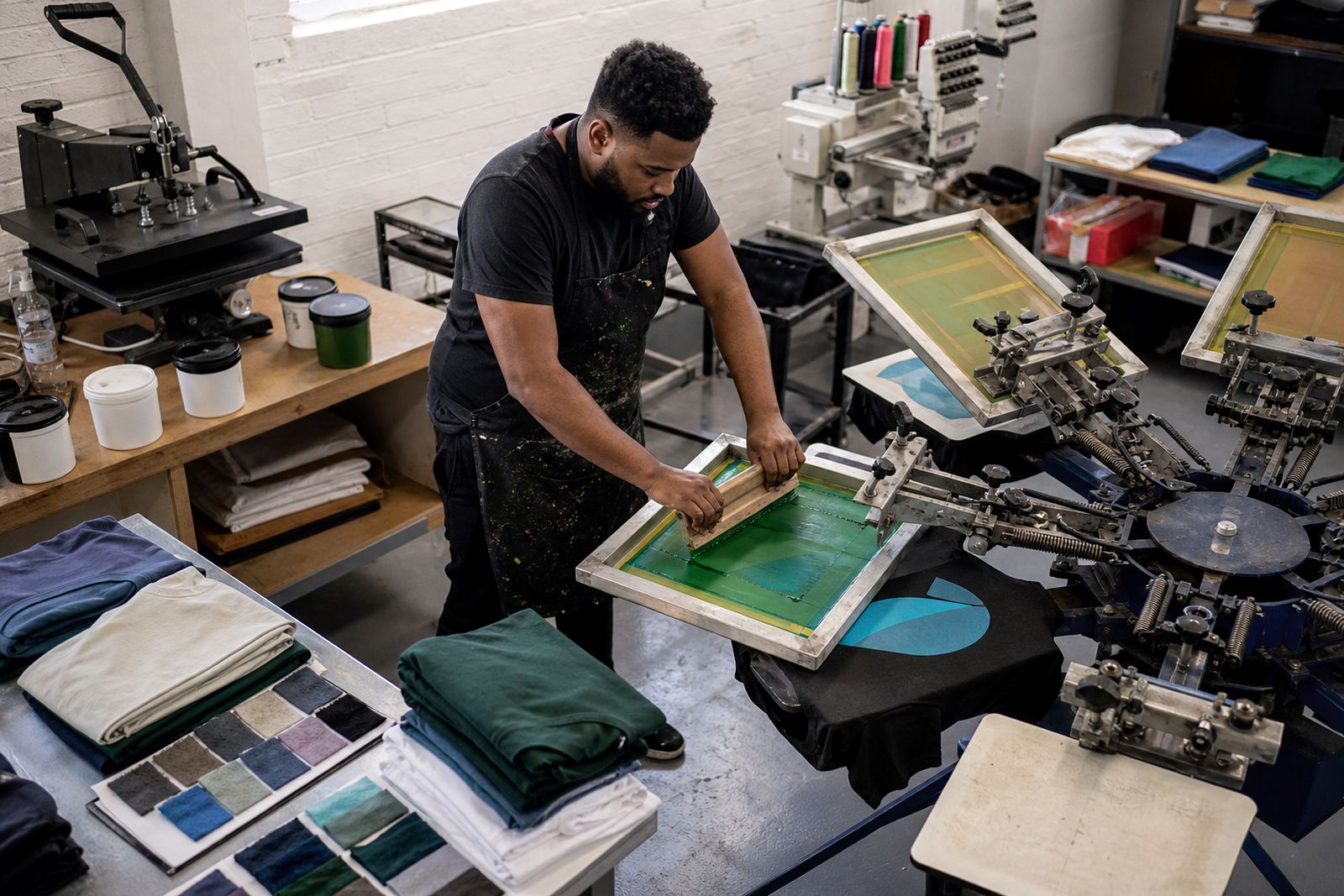
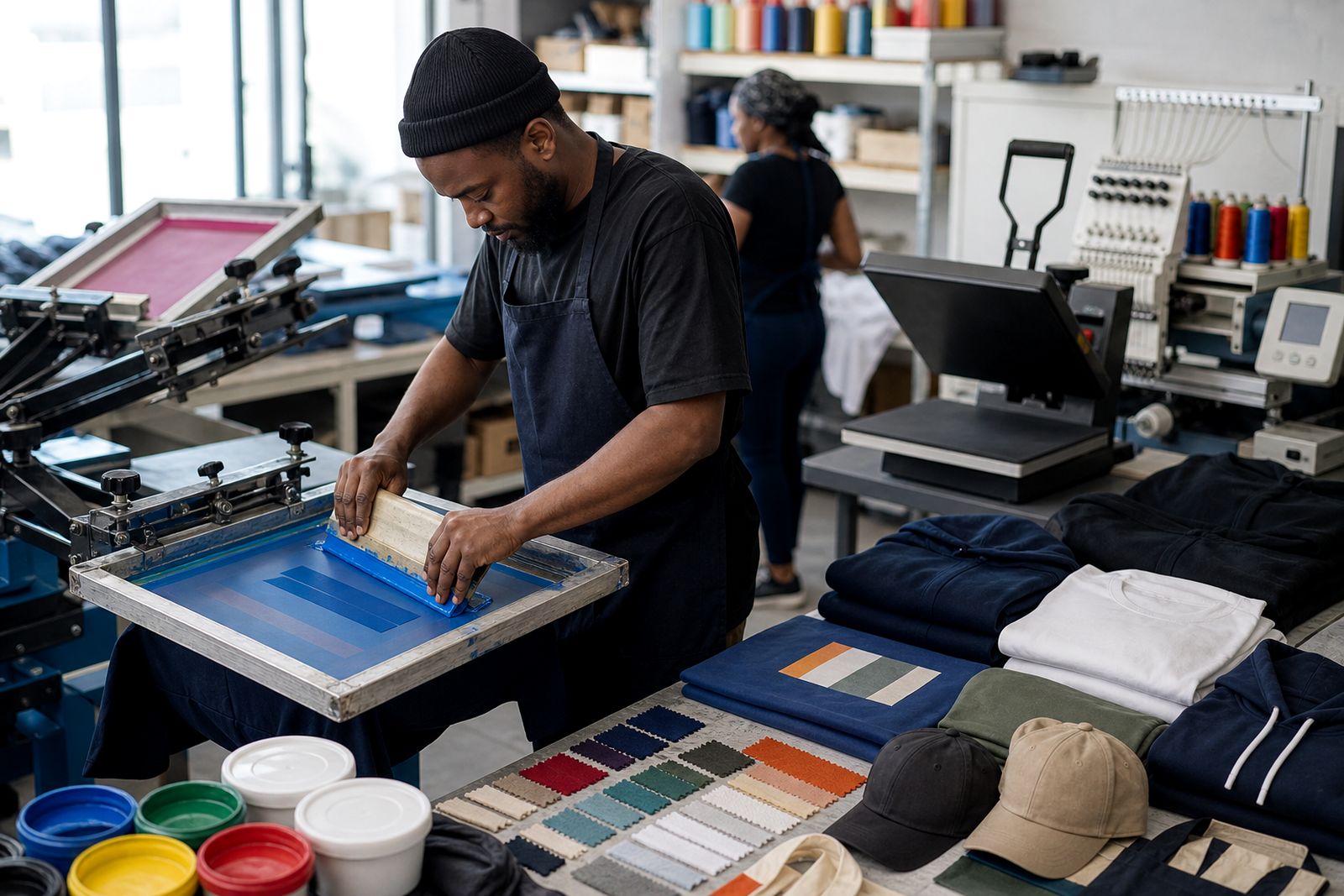
Large chest blocks on hoodies with a solid underbase.
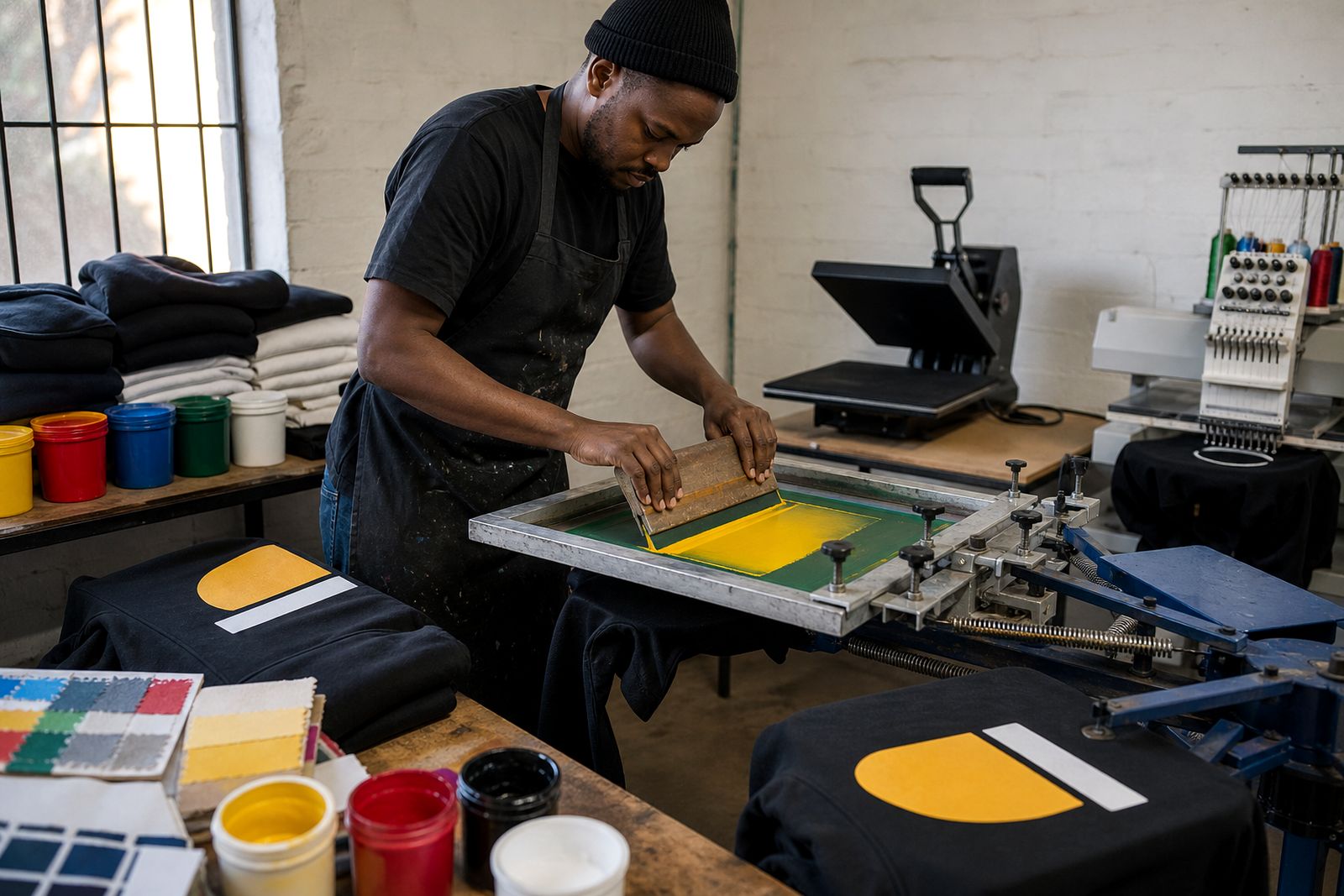
Chest block setup on hoodies
Use our contact form to give the chest print size, fabric blend, and whether the garment is fleece or brushed cotton. That gives a better starting point for underbase choice, white coverage, and the nearest colour pack or swatch note for dark garments.
The hoodie block studio is built around large chest blocks on hoodies, where the underbase does most of the heavy lifting. Dark garment underbase is the first route because fleece, dyed rib, and brushed interiors can push colour dull or uneven if the white is too thin. Keep the swatch note close to the press so the black hoodie sample and the approval language stay aligned.
Start by recording the hoodie brand, fabric weight, and chest panel measurement before screens are exposed. Next, print the first solid block and check how the white sits across the knit ribs and pocket seam area if the artwork runs low. After that, inspect stencil edge build-up, pallet tack, and flash balance on a second pass. Finish by noting whether the same block will run on navy, charcoal, or bottle, because each ground shifts the top colour differently.
Hoodie work goes wrong when the sample photo is taken before the white layer is checked in proper light. Across South African winter runs, heavy fleece and cold morning platens can change how quickly the underbase flashes, especially on darker stock pulled from storage. If a power cut interrupts a shift, use the powered window for print checks first, then do beauty shots once coverage, hand feel, and registration are signed off.
Checks for dark hoodie stock
The useful brief is garment-specific rather than broad. When you send details through our contact form, include the hoodie colour, chest print width, and whether the studio is aiming for a soft hand or a hard, opaque block. A short production note about fibrillation, dye migration, or seam placement is more useful than general artwork commentary.
- Hoodie make, blend, and colour logged
- First white block checked under bright light
- Chest width matched to adult sizing
- Pocket, drawcord, and seam risks noted
- Follow-up note scheduled
Studios sending hoodies between Meadowdale, Cresta, Tyger Valley, Pavilion, Baywest, Mimosa, Riverside, and Clearwater need one clear handover note on the block size, underbase result, and garment shade. That matters more on dark fleece than a polished sample image, because the next table must see what was tested and what still needs adjustment.
Common faults on hoodie blocks
A chest block fails when it is treated like a flat tee print. Hoodies bring loft, thicker seams, and more movement under the screen, so a setting that works on smooth cotton can leave pinholes, fuzzy edges, or a heavy patch on fleece. Keep the guide focused on one chest block method and move sleeve hits, neck labels, or puff effects into a separate studio plan.
Most waste on hoodie blocks comes from lint, cold garments, off-contact drift, and garment swaps during the run. Match the relevant swatch note and colour pack, then send a note through our contact form with the city, garment quantity, and the darkest hoodie shade in the batch. Include whether the run is local retail stock or part of a wider regional shipment so the print notes stay accurate.
Primary route: Dark garment underbase. Browse more under Colours and Swatches.
What our Print and Embroidery Supplies customers say
Verified Google reviews
Also worth a look

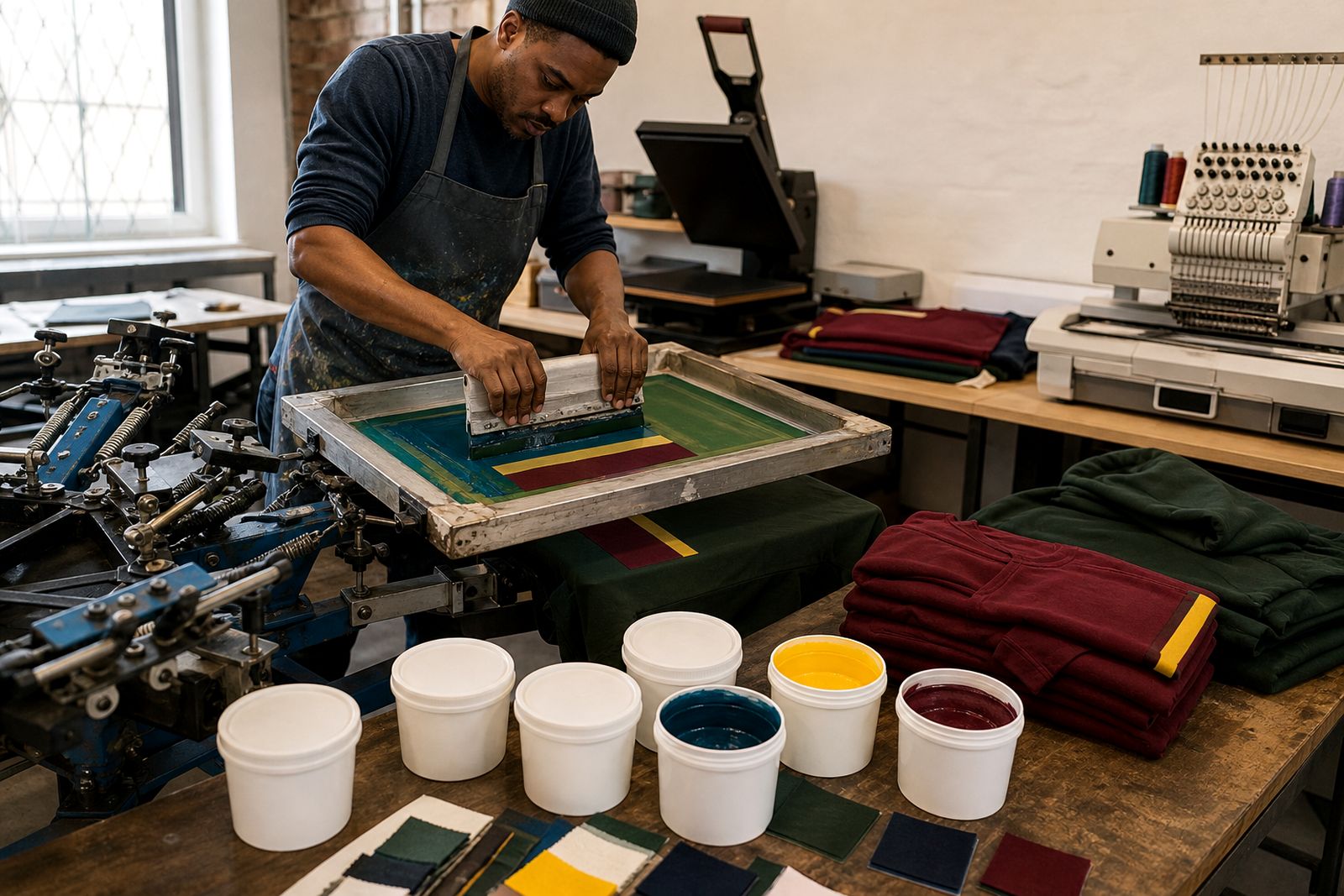
Tell us about your print room
Send a note through our contact form with the garments and fabrics you decorate, the print or embroidery method, the colours you need matched, how much you run in a month and your area, and we will come back with practical supply options and a quote.
Open the contact form