Dark garment underbase
White underbase for dark garments so colour stays true after wash.
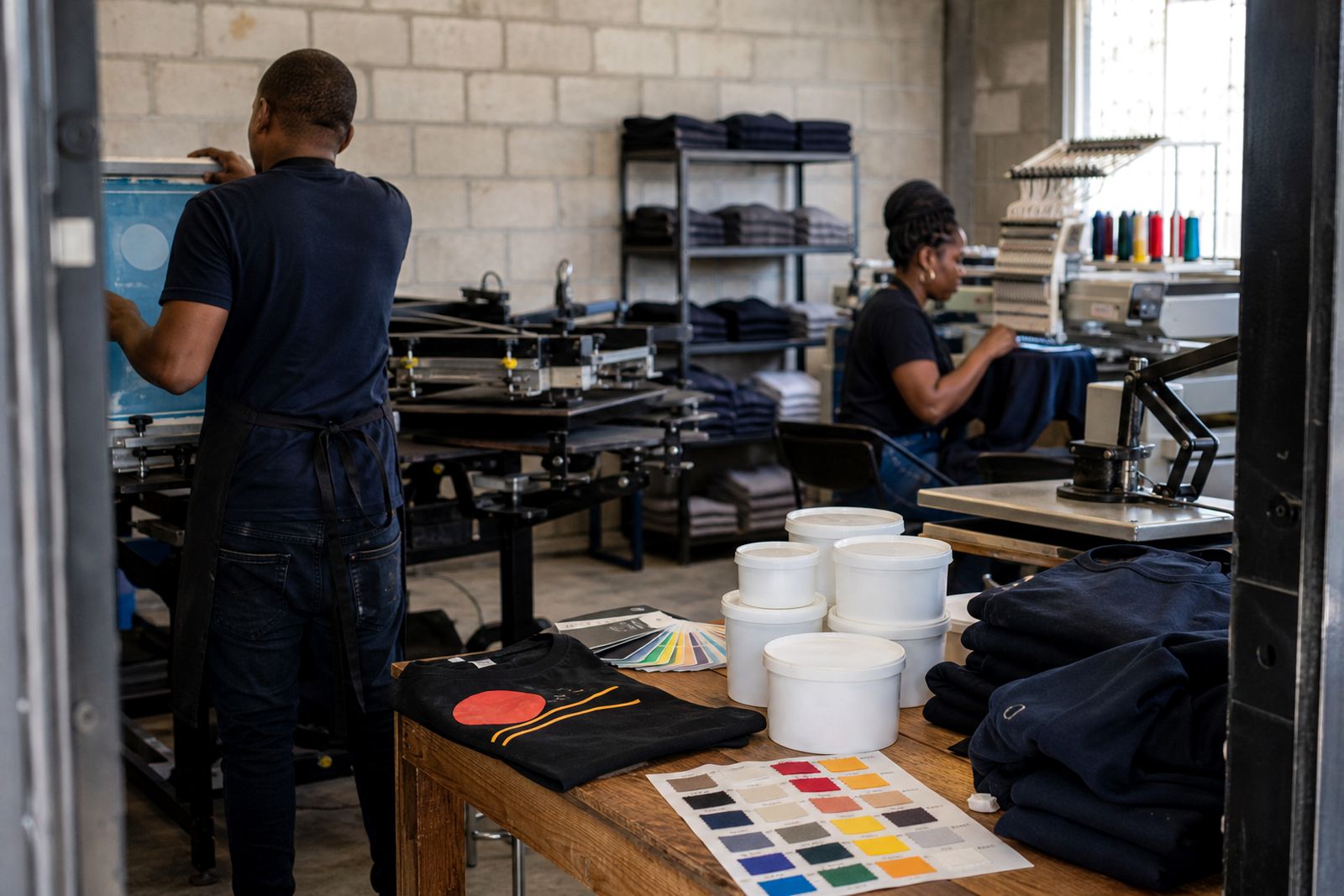
White base for black tees
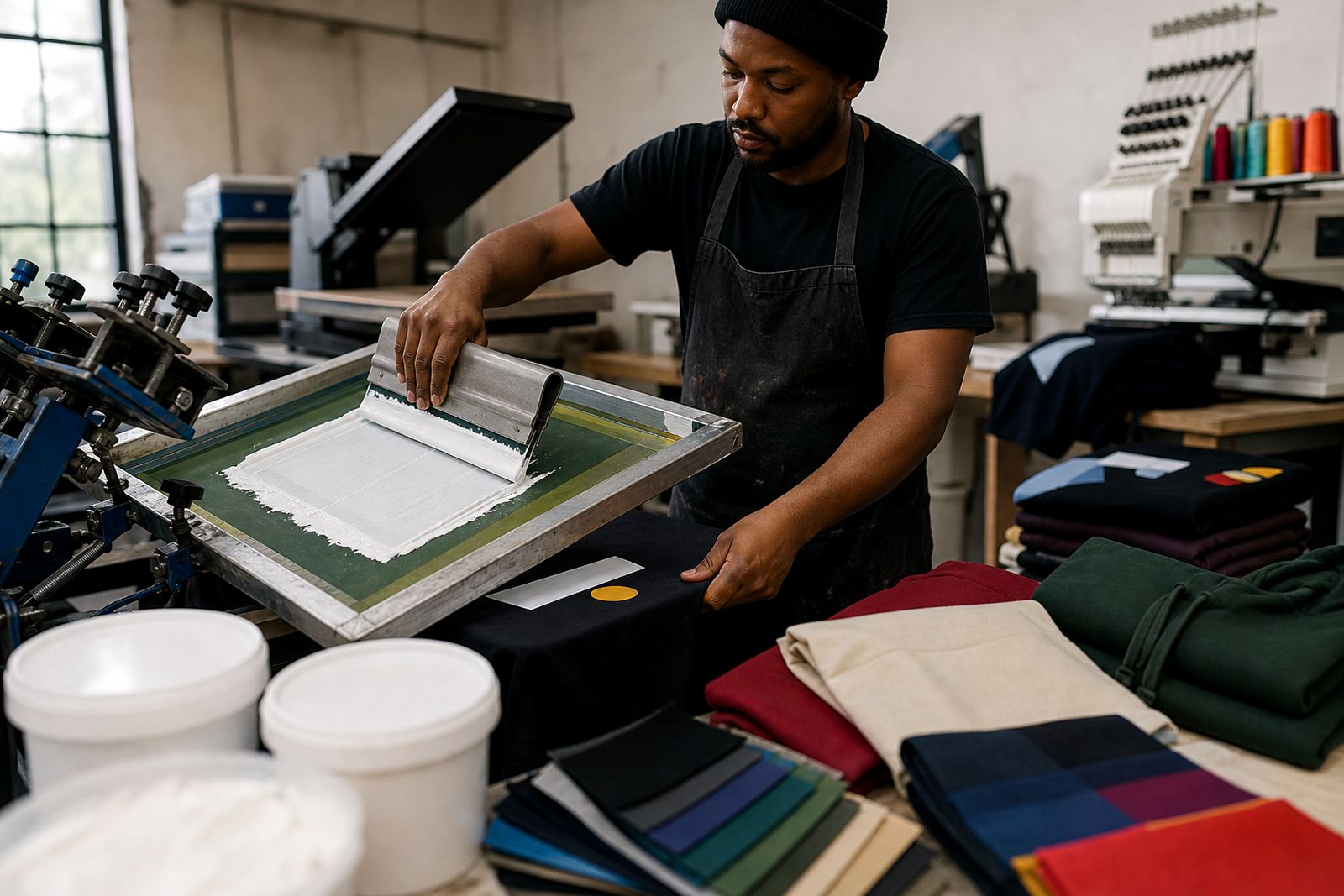
Dark garment underbase is the first white layer used under colour on black, navy and deep bottle garments. It lifts the print off the fabric so reds, yellows and team colours do not sink into the knit after curing and washing. In most studio runs, this layer does more work than the top colour people notice.
For plastisol jobs, studios usually pair the underbase with a mesh that can hold enough white without building a ridge. Water-based sets need tighter control on deposit, flash and reprint so the shirt stays soft while the colour still covers. Keep squeegee pressure consistent, because an overworked white base makes registration harder on the next screen.
Run a test print on the darkest garment in the order before bulk starts. Check for fibre show-through, pinholes in large solids and whether the flashed white is dry enough to take the next hit without pulling. One washed sample from the first stack tells you more than ten dry shirts on the table.
What the underbase note covers
Dark garment underbase is built for dark garment printing rather than general ink handling. It covers white base deposit, flash stage, and simple checks that matter in South African studio conditions, from dry inland air to coastal moisture. If another product suits the garment better, we point you toward Studios.
Match the white base to the colours planned over it before opening the job. Some palettes need a brighter white for clean blues and citrus tones, while vintage prints can use a lighter deposit and a softer hand. Read the paired note under Swatches, then use our contact form with the garment colour, mesh count and whether you are flashing between hits.
- Test on the darkest blank first
- White deposit suited to mesh choice
- Flash time checked before top colours
- Swatch note matched to garment shade
Highveld dust and coastal moisture
White underbase reacts quickly to workshop conditions across Gauteng, KZN and the Cape. Dry Highveld air can thicken open ink on press, while coastal humidity slows flash consistency and can leave the next colour sitting on a tacky base. Those shifts show up fastest on black shirts and hoodies.
Lint from fleece and brushed cotton needs more frequent screen checks during longer runs. After power cuts or a paused shift, print another sample before restarting, because platen heat and flash balance may have changed. If you are comparing options in person, use that time on swatches, film references and thread palettes rather than guessing from one old sample.
Press checks for solid white
| Volume / band | White bottle |
|---|---|
| Screen / role | Darks |
| Notes | Darks fail when white is skipped or logged badly. This bottle is the quiet hero. |
Brief against the basics that affect coverage on dark garments: mesh, squeegee durometer, flash dwell, curing temperature and wash result. Keep the product name visible when you use the contact form so the note stays tied to the right underbase page.
Related pages
Underbase guidance
White underbase for dark garments so colour stays true after wash.
Read more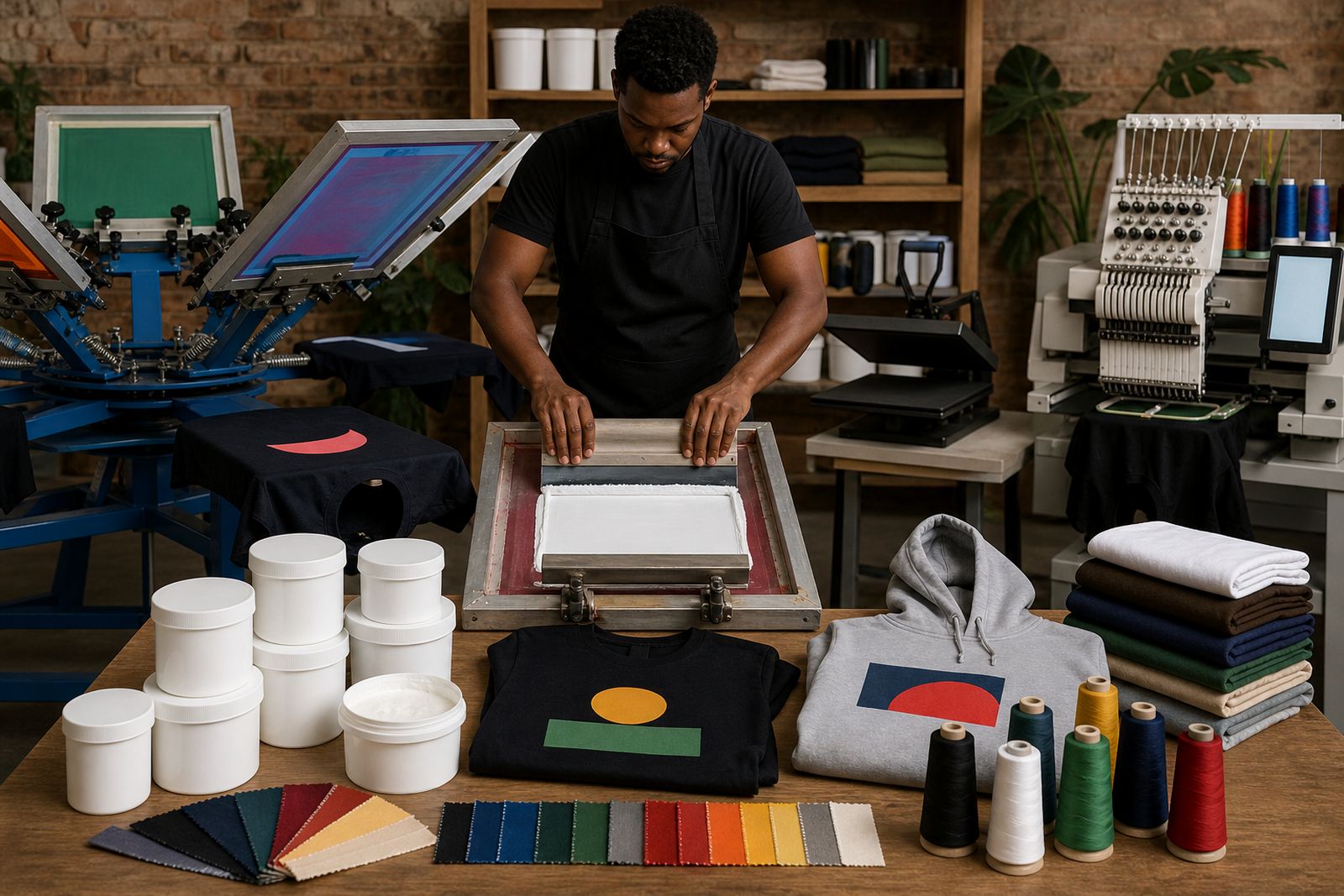
Underbase support
White underbase for dark garments so colour stays true after wash.
Read more
Embroidery thread palette
Thread colour trays matched to print inks so stitch and print stay in the same room.
Read moreWhat our Print and Embroidery Supplies customers say
Verified Google reviews
Tell us about your print room
Send a note through our contact form with the garments and fabrics you decorate, the print or embroidery method, the colours you need matched, how much you run in a month and your area, and we will come back with practical supply options and a quote.
Open the contact form