White shake ritual
The thirty-second habit that saves darks.
White underbase before first pull
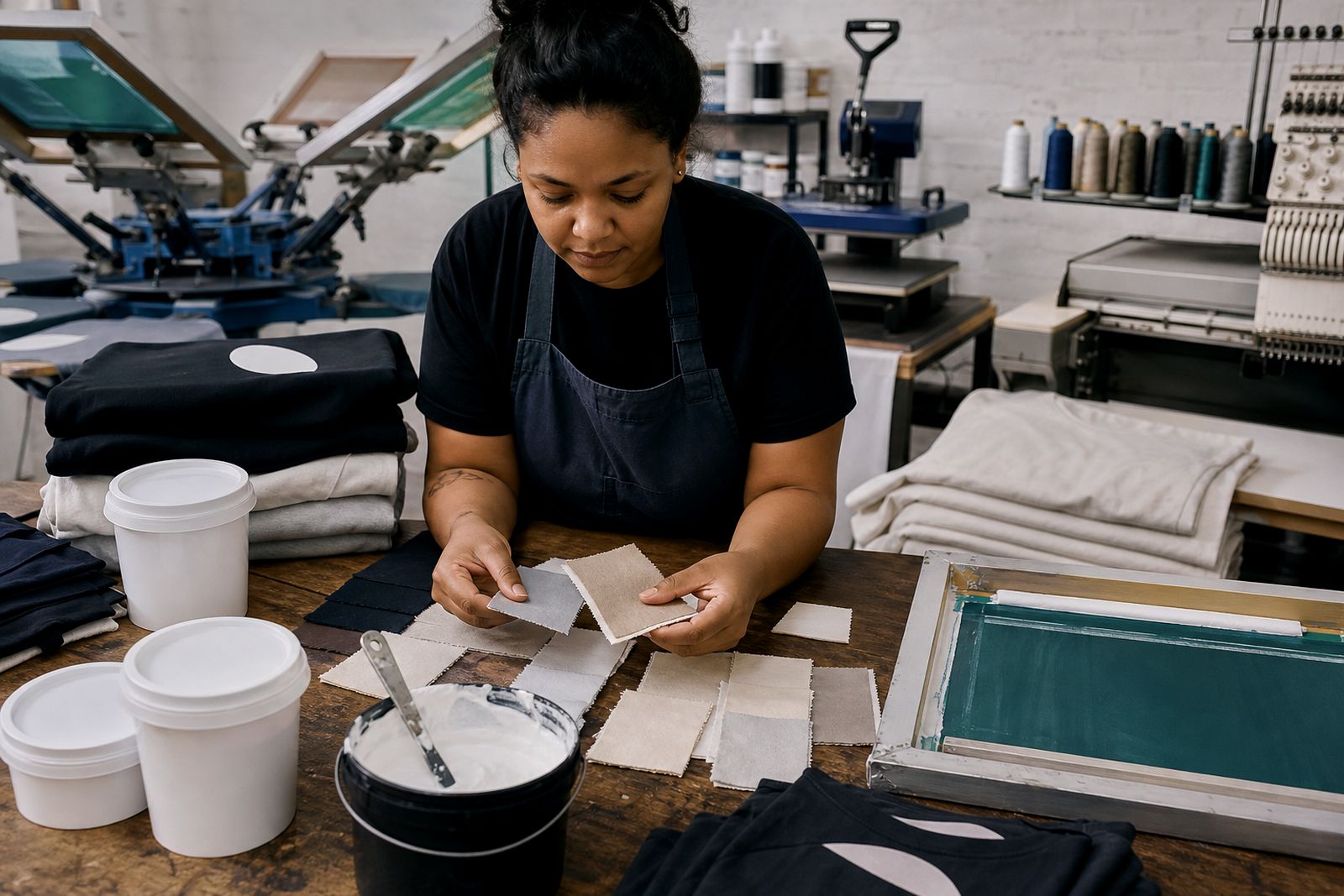
White shake ritual is the habit of rolling and inverting white ink before the lid comes off, especially on underbase work for black tees and dark fleece. Thick white settles hard in storage, and the first pull can run chalky or watery if the bucket was opened cold and left unstirred. This note fixes the language around that thirty-second check so every press hand starts from the same point.
Across South African studios, winter mornings on the Highveld and humid coastal stockrooms affect white far more than bright colour packs do. A bucket that sat overnight can separate enough to throw opacity, flash timing, and mesh behaviour on the first dozen prints. Keep this swatch note with the job card when white is carrying highlight detail or blocking garment show-through.
Willem Kleynhans wrote this after hearing the same issue described three different ways between Johannesburg, Durban, and Cape Town benches. One printer blamed flash, another mesh, another the garment itself, yet the bucket had simply not been shaken and mixed properly. The ritual gives crews one shared starting check before screens, squeegee pressure, or cure temperature get blamed.
Bench checks before white opens
Start with the bucket temperature, lot marking, and surface look before you load the screen. Then shake with the lid sealed, open slowly, and stir down any heavy body from the base until the white reads even from top to bottom. On dark garments, print one test set and compare body, edge hold, and flash response before the run count begins.
- Lot code and room condition noted
- White body checked top to bottom
- First dark-garment test print kept
- Flash response compared after remix
- Swatch note attached to ticket
During power-cut windows, protect mixed white from standing too long between short runs. Put the lid back on, keep contamination out, and mark any restart where the ink had to be re-shaken before printing resumed. In coastal shops, watch moisture and slower flash behaviour after breaks.
Next references for dark stock
Open Colours for white options and underbase pairings, check Studios for screen-print use cases, and use Resources when you need a bench note to pin near the press. Send details through the contact form if the question is about storage, remixing, or behaviour on dark garments.
For swatch queries, send the underbase mesh, the garment type, and the ink lot if you have it. Coastal studios should mention Durban or Cape Town conditions, because moisture changes how white settles overnight and how hard the bucket needs to be shaken before the first print.
Pastel trays are useful when you want to compare white body and garment coverage on an actual sample. Bring the print and the fabric type used on press.
What our Print and Embroidery Supplies customers say
Verified Google reviews
Tell us about your print room
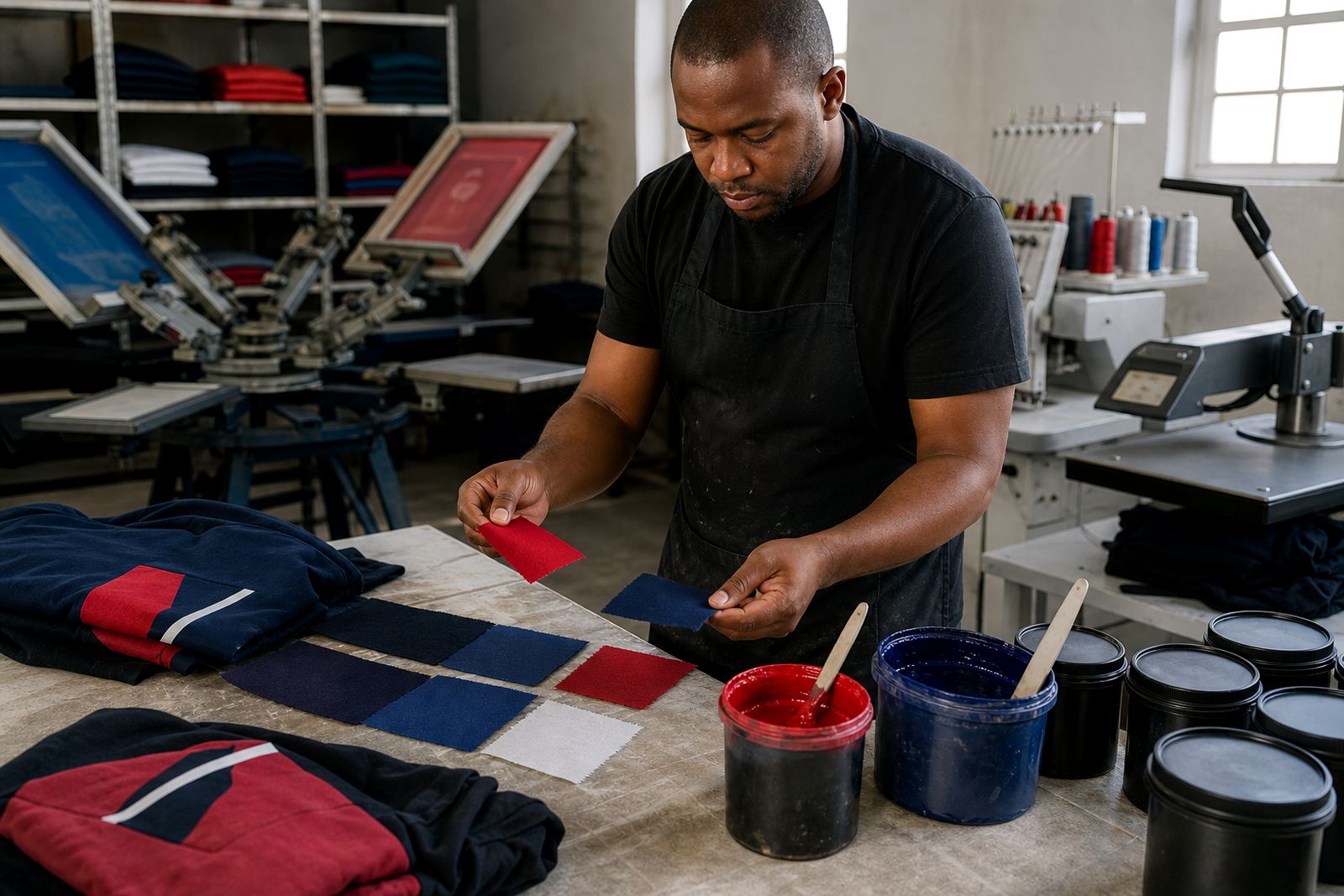
Send a note through our contact form with the garments and fabrics you decorate, the print or embroidery method, the colours you need matched, how much you run in a month and your area, and we will come back with practical supply options and a quote.
Open the contact form