Soft hand vs workwear melt
Choose melt by garment, not by an inspiration board.
Choosing melt for the garment
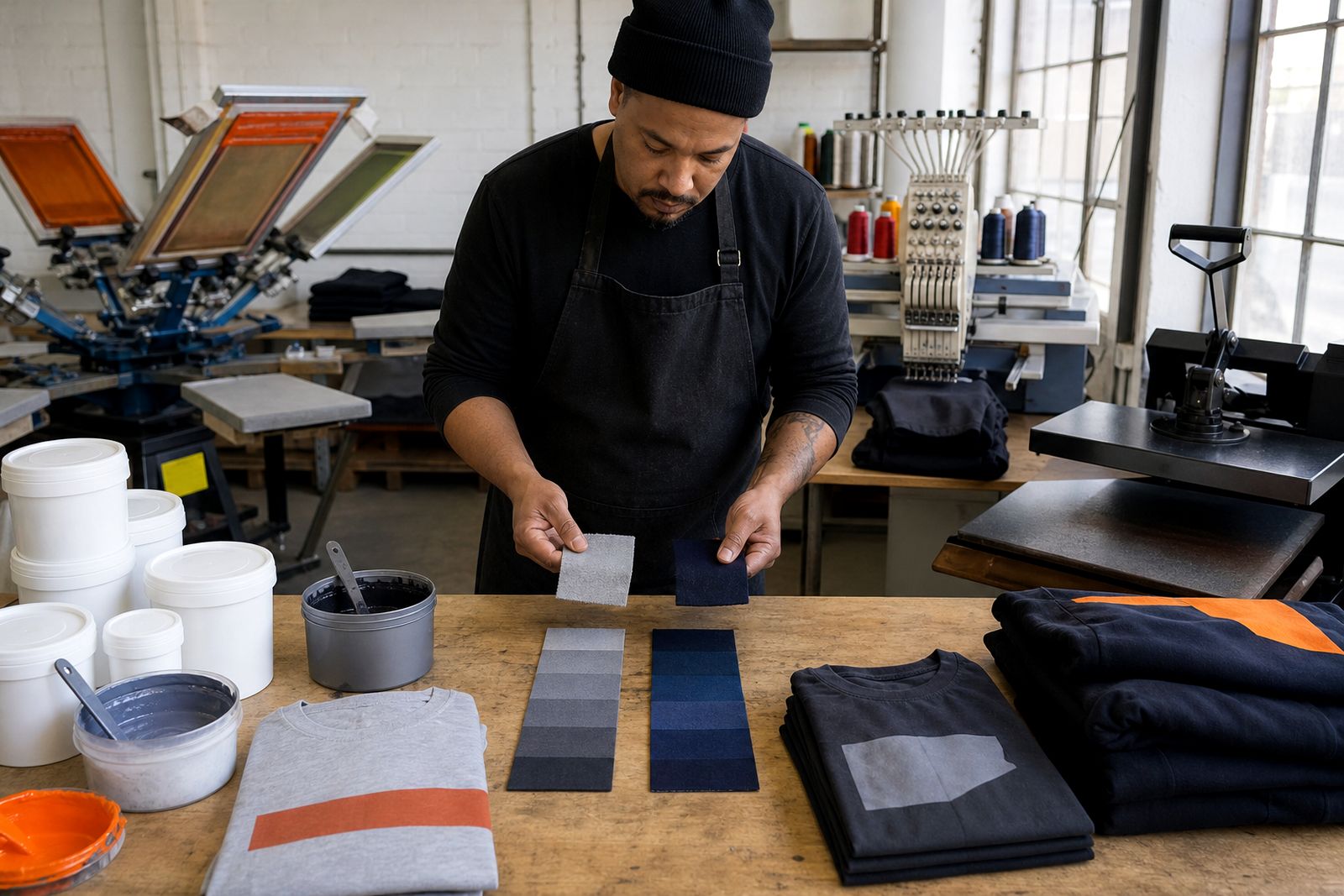
Shows how a soft hand melt differs from a tougher workwear grade when you are matching swatches for tees, hoodies, overalls, and branded uniforms.
Soft hand vs workwear melt compares transfer behaviour, not only the feel of a finished print. It is written for South African studios weighing thin fashion cotton against polycotton crew tops, security wear, and heavier workshop stock. Expect notes on press temperature, dwell time, film release, thread interaction on embroidered blanks, and the checks worth doing before a full run starts.
In many South African print rooms, a switch from one melt grade to another gets made on the table and never reaches the job card. That gap usually shows up later as a badge print that feels sticky on one batch and brittle on the next. Keep this note with the swatch set so buyers, press hands, and finishers are testing the same hand feel before production starts.
Studios in Midrand and Pinetown often use different terms for the same print result on heavier garments. One crew may ask for a softer laydown, while another is trying to stop edge lift after repeated laundering. Here the wording is tied to fabric weight, press settings, and expected wear so handoffs stay clear.
Bench checks before production
Start with the actual garment, not the artwork alone. Test the chosen melt on one blank from the same fabric lot, check hand-feel after cooling, and inspect adhesion around seams, ribs, and stitched areas. For embroidered pieces, compare how the transfer sits beside raised thread so the print does not look undercooked or overly thick.
- Garment fabric and weight noted first
- Peel result checked hot and cooled
- Wash risk flagged for daily wear
- Press setting written for the next operator
- Swatch note attached to the job file
If a power cut interrupts testing, save the pressed sample with its temperature and time notes attached. A cooled sample tells you more than memory when deciding between a soft hand finish and a harder-wearing workwear melt. In coastal humidity, keep film covered between tests so release behaviour stays consistent.
Useful follow-up pages
Browse Colours when you need transfer shades that sit right on dark cotton and polycotton. Use Studios to narrow the choice by print environment, and open Resources for reference sheets your team can keep at the press. The contact form is best used with the garment type, fabric blend, and whether the job leans fashion or workwear.
When sending a query, describe the transfer after pressing and add one note on the garment fabric. We can read the problem faster when the message states whether you used cotton tees, poly-cotton fleece, or heavier workwear twill. For coastal plants, mention Durban or another humid area because stored film and powder can behave differently there.
At Clearwater, Cresta, Pavilion, and Tyger Valley, sample boards help teams compare a soft-hand result against a tougher workwear melt on actual garment weights. Bring the blank you use in studio, especially if your range mixes fashion tees with overalls or contractor jackets. That keeps the swatch discussion on press behaviour and wash wear, not only colour.
What our Print and Embroidery Supplies customers say
Verified Google reviews
Tell us about your print room
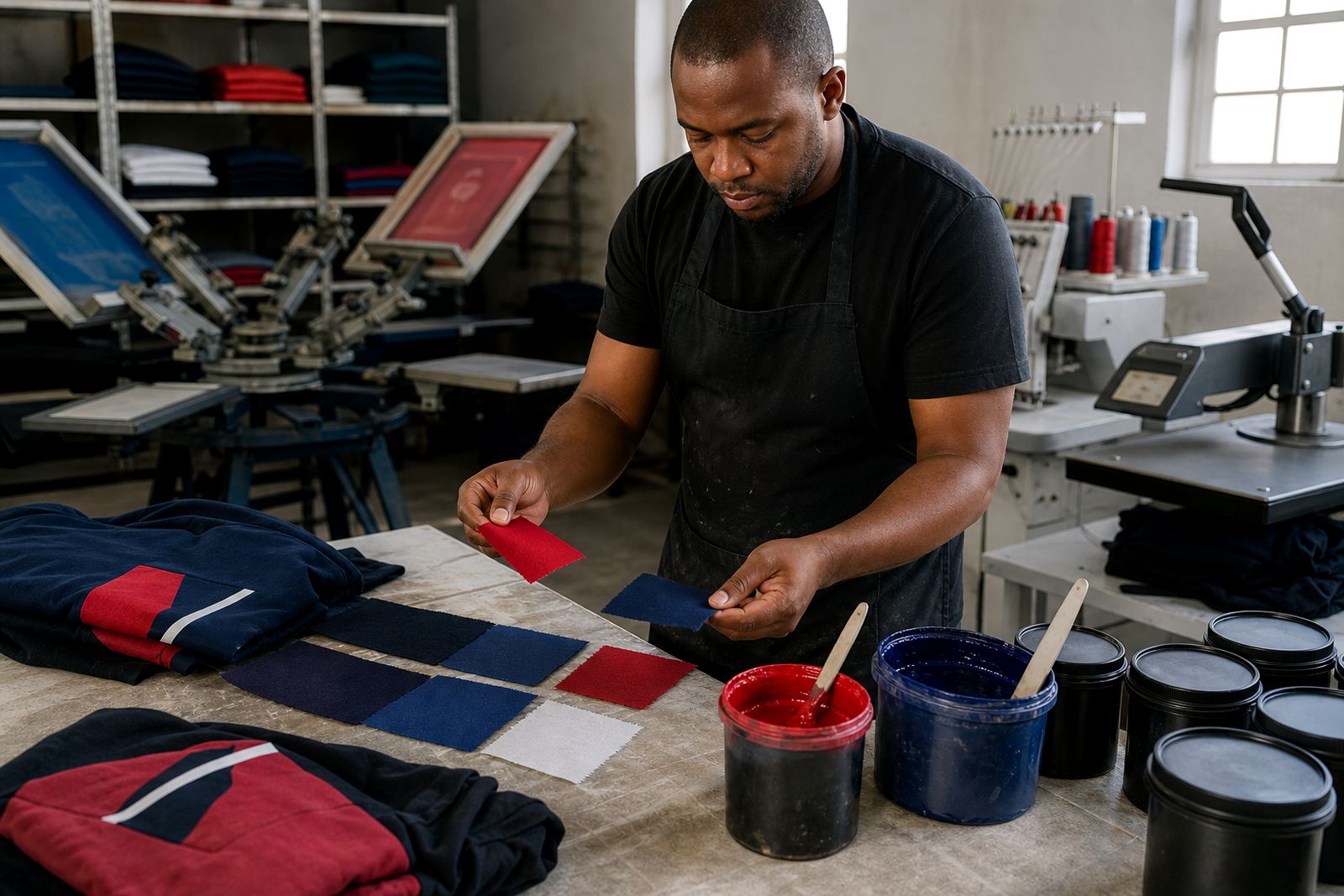
Send a note through our contact form with the garments and fabrics you decorate, the print or embroidery method, the colours you need matched, how much you run in a month and your area, and we will come back with practical supply options and a quote.
Open the contact form