Screen beside digital
Mixed rooms without a civil war on the bench.
Shared standards for mixed rooms
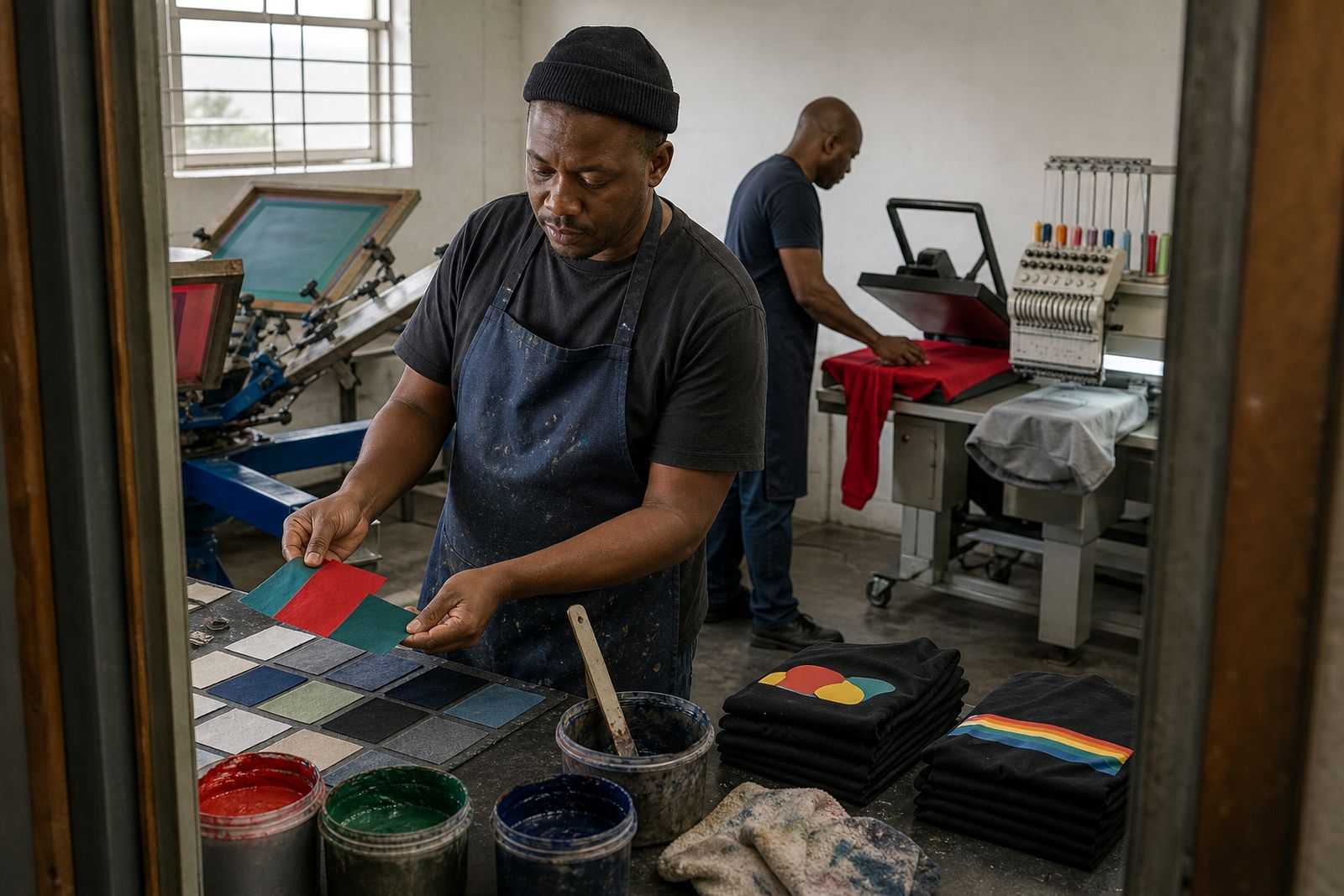
Book bench comparisons around production windows, then bring the print file and the matching mesh note. Showroom viewings work best when the screen drawdown sits beside the digital proof under the same light box.
Screen beside digital deals with one table carrying two output methods on the same job. Set out the checks that stop a plastisol pull, a DTF sample, and a digital strike-off from being judged with three different standards. Expect notes on white underbases, film density, thread reference cards, and how to mark an approved sample for the next shift.
Many South African studios lose time when the digital sample looks right on screen but the screen print is approved under different lighting. A small mismatch in white point or film opacity can send everyone back to the first colour call.
The page comes from jobs where one bench spoke in RIP settings and the other spoke in squeegee pressure. Durban humidity, Highveld dust, and rushed handovers all make that gap wider. Here the terms are pulled into one working language that production, sampling, and sales can all read off the same card.
Checks before first approval
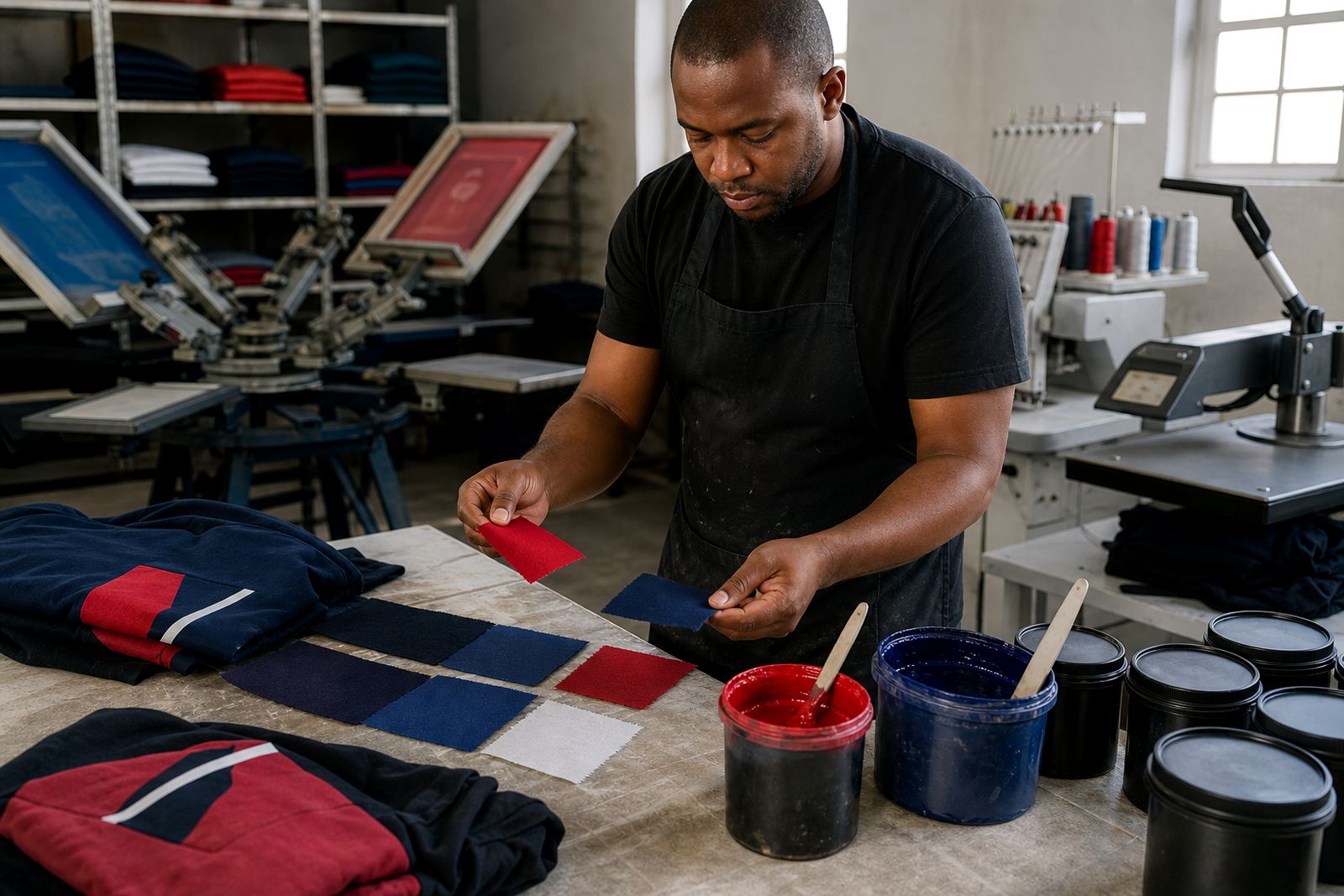
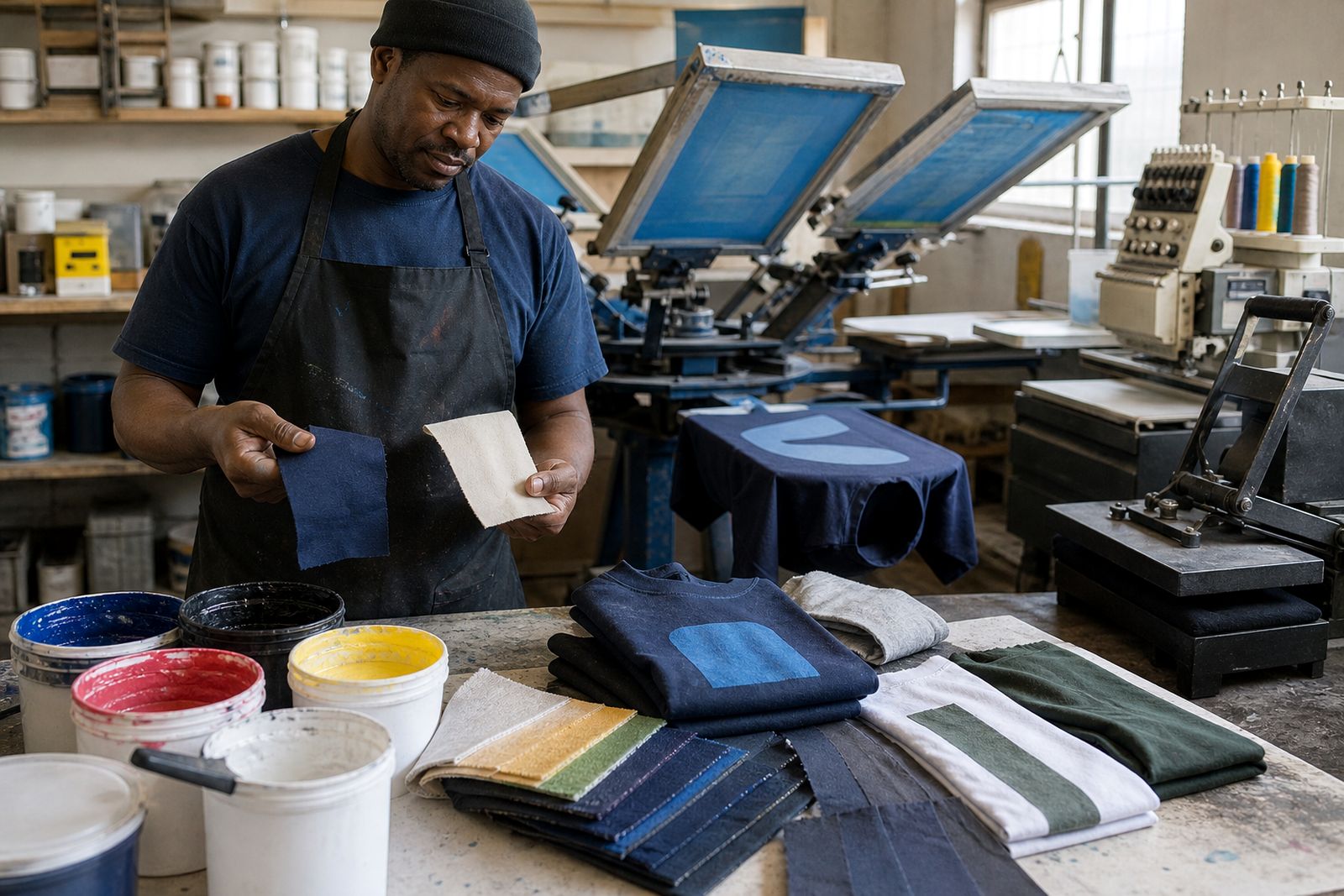
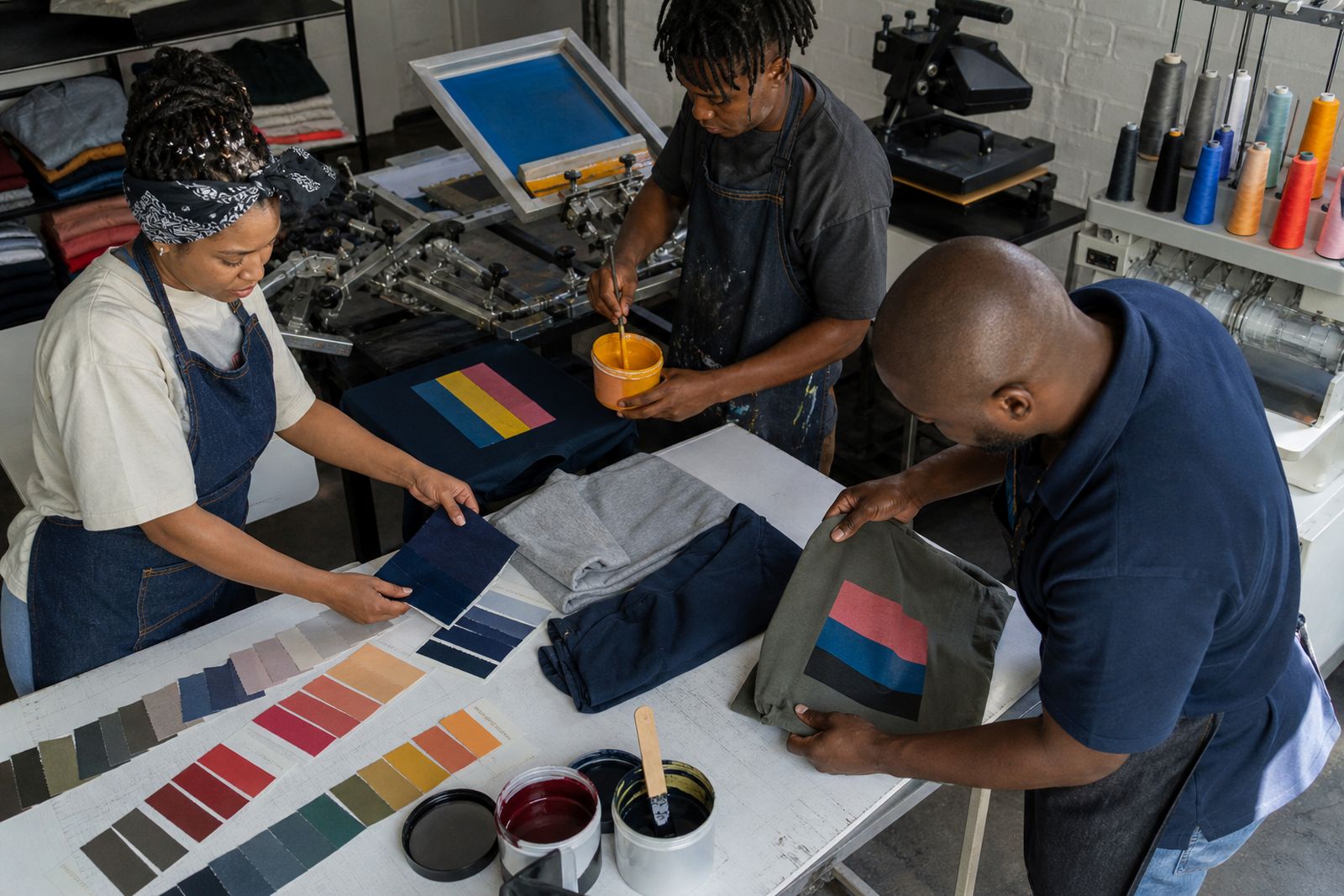
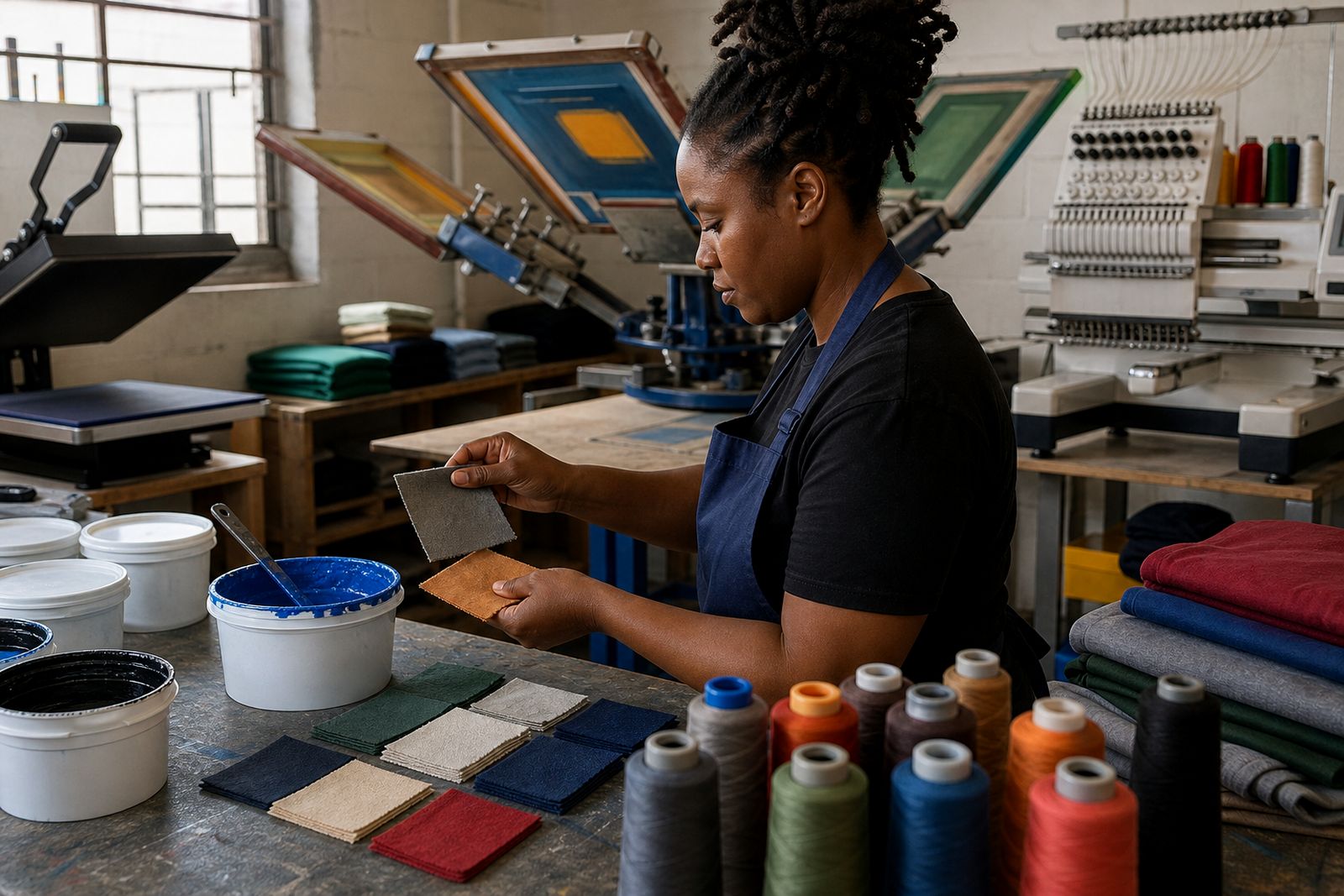
Lay the digital proof, screen pull, and customer reference in one row before anyone comments on colour. Confirm the substrate, ink system, and mesh count against the job card, then note the light source used for the comparison. Where embroidery is part of the set, keep the thread palette nearby so printed reds are not judged against memory alone.
- Light source noted beside each sample
- Mesh count matched to approved pull
- Digital profile recorded on the ticket
- Customer reference marked as control
- Swatch note attached to the job file
When a power cut interrupts the run, save the approved comparison first and cover it from dust and overspray. Coastal shops should also bag films and paper proofs once the air turns damp. Rejected pulls must stay separate from signed samples so the wrong piece does not go back onto the bench.
Ink, film, and file links
Open Colours when you need matching packs for side-by-side approvals. Check Studios for room-specific setups, and use Resources for cards you can print and keep at the bench. Send edge cases through the contact form if the issue sits between screen and digital rather than inside one department.
For mixed rooms, laying the screen print beside the digital proof helps more than a long mail trail. Note what still differs, such as underbase strength, halftone grain, or thread match under cool white tubes. Coastal studios should mention humidity, because film handling, mesh storage, and paper curl behave differently in Durban than they do inland.
Comparison demos work best when you bring the actual sample set used in production. A loose screenshot cannot show ink deposit, thread sheen, or how the white reads on the chosen garment. Put the approved and rejected pieces in the same folder so the difference is visible at once.
What our Print and Embroidery Supplies customers say
Verified Google reviews
Tell us about your print room
Send a note through our contact form with the garments and fabrics you decorate, the print or embroidery method, the colours you need matched, how much you run in a month and your area, and we will come back with practical supply options and a quote.
Open the contact form