

Hot peel vs cold peel
Peel style changes scrap more than ink brand claims.
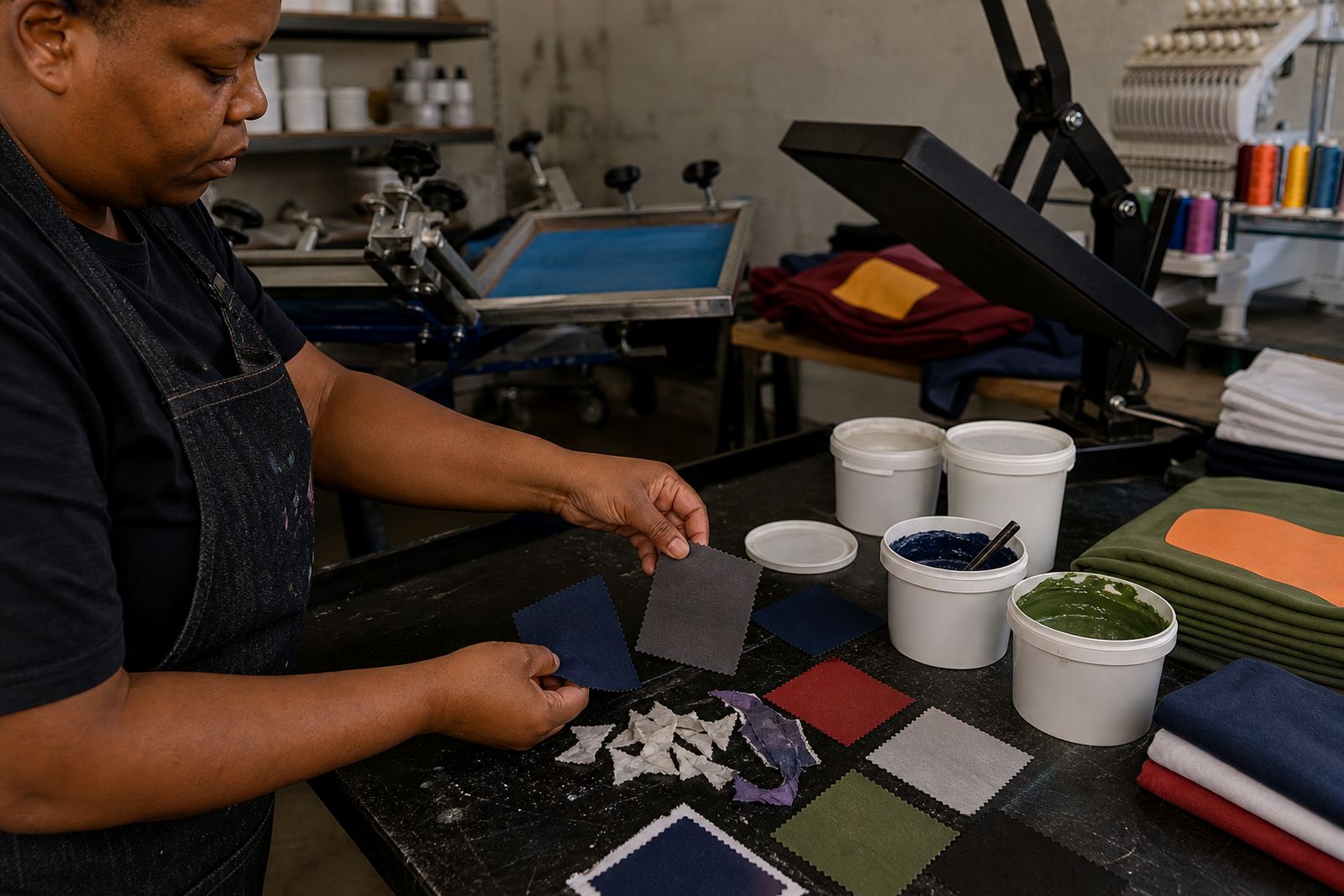
Why peel timing matters
Hot peel vs cold peel changes the hand feel, edge release, and how much adhesive stays on the carrier. Expect notes on press temperature, dwell time, release speed, and what to check before blaming the powder or film.
A peel choice can waste more transfers than a minor ink swap when the room is cold or the stack sat overnight. Keep it next to your swatch card, powder note, and garment test results for the job.
We put this together after hearing Johannesburg and Durban studios describe the same failed transfer in different ways. One crew said the print looked milky after peeling. Another called it under-cured because the edge lifted on the second press.
Checks before peeling
Start with the first pressed sample, not the tenth, and note the exact peel method used. Confirm platen temperature, verify dwell with a timer, and watch whether the film releases cleanly from small text and fine outlines. If the print is for sportswear or caps, test stretch and edge grip before running the full stack.
- Press temperature written beside the sample
- First clean peel kept with date
- Film, powder, and garment noted
- Second press instruction ready for handoff
- Swatch note attached to the job card
When power dips or the press cools between runs, re-check the next transfer before restarting production. Winter mornings on the Highveld can change peel behaviour enough to confuse a team that only logged the afternoon settings. Keep failed peels in a marked packet so everyone can compare silvering, fibre lift, or cracked edges later.
Useful follow-on pages
Browse Colours for ink and powder options, Studios for setup notes by shop type, and Resources for printable press sheets. Use the contact form if you need to match a peel method to a specific film, fabric, or transfer size.
Comparing the lifted print with the pressed sample usually tells more than a long message chain. We can read the problem better when you include garment type, press setting, and whether the carrier was peeled immediately or left to cool. Coastal humidity should be mentioned, especially if film sheets were stored open in the print room.
Sample discussions at Clearwater, Cresta, Pavilion, and Tyger Valley work best when you bring an actual transfer and fabric offcut. A hot peel that looks fine on a smooth tee can behave differently on brushed fleece or a heavy cotton golfer.
What our Print and Embroidery Supplies customers say
Verified Google reviews
Tell us about your print room
Send a note through our contact form with the garments and fabrics you decorate, the print or embroidery method, the colours you need matched, how much you run in a month and your area, and we will come back with practical supply options and a quote.
Open the contact form