Fleet wash cards
Industrial laundry expectations on one page.
Industrial laundry reference cards
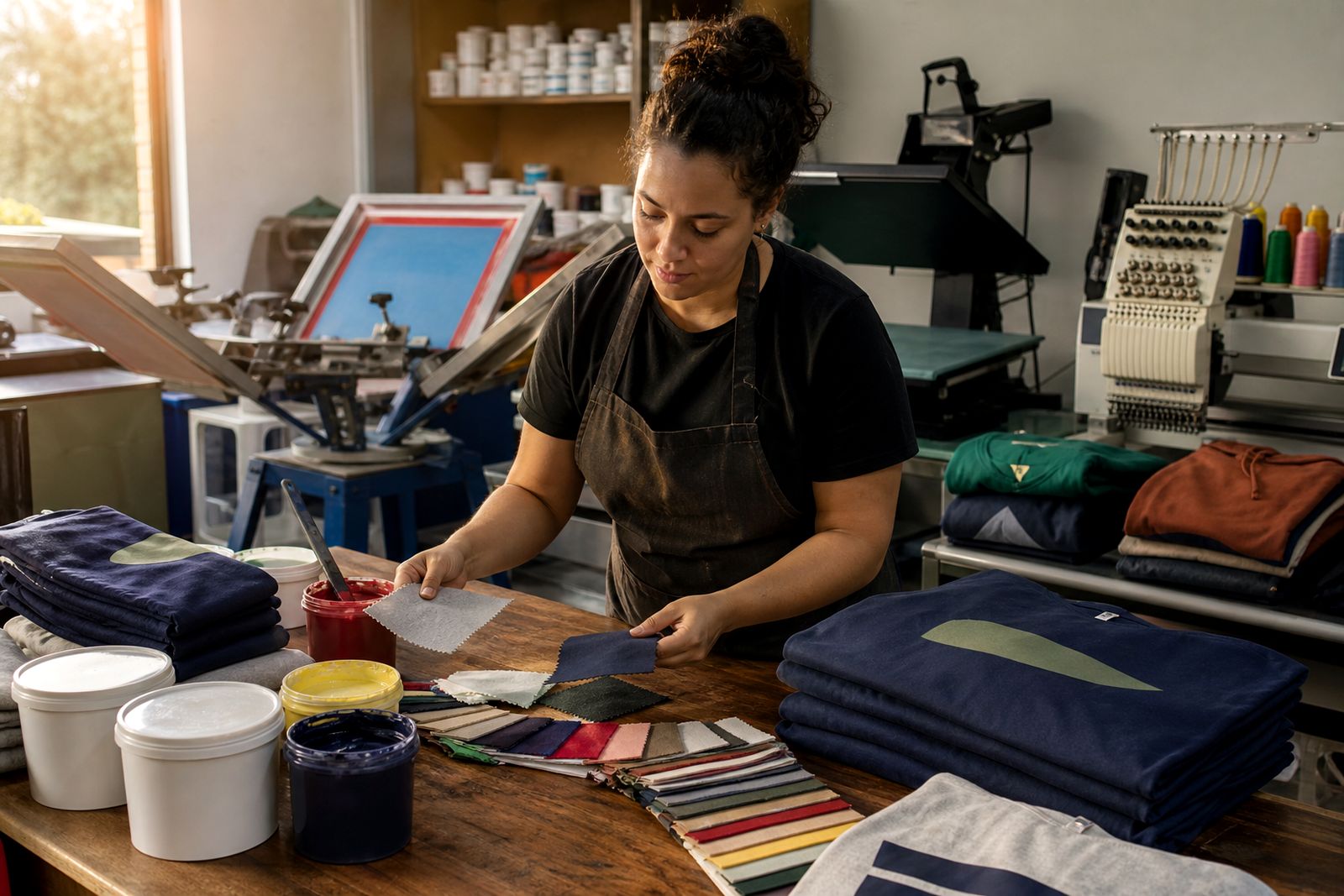
Ink Style SA supplies swatch and print reference tools for working studios across South Africa. Fleet wash cards record how garments, overalls and linens are expected to look after repeated industrial laundering.
Fleet wash cards give a print room or embroidery counter one sheet to compare colour hold, edge wear and fabric shift after washing. They are useful for workwear programmes where the same navy, red or safety colour must be checked against repeat laundry cycles. Note what to capture before sampling, what to inspect after wash tests, and how to keep those results attached to the correct garment range.
Many South African studios test a strike-off, approve it, then lose track of what happened once the item went through a commercial wash process. A fleet wash card keeps the outcome visible beside the swatch, especially for uniforms, housekeeping stock and branded service wear. Use it with your shade reference and job notes so the wash result is not separated from the original approval.
Teams in Gauteng, Durban and the Cape often use different words for the same wash issue. One person marks it as fading, another writes abrasion, while the customer only sees that the chest logo no longer matches the issue sample. A proper fleet wash card sets out shared checks such as ink hold, thread appearance, shrinkage and legibility after laundering.
Checks before the wash run
Start by attaching the correct fabric and colour reference to the card before any washing takes place. Record the garment type, print or embroidery position, and the laundry method being tested, whether tunnel wash, hot industrial cycle or standard detergent process. After the wash, compare cracking, stitch lift, edge fray and any obvious shade movement against the unwashed sample.
- Garment code and fabric blend noted
- Unwashed sample fixed beside result
- Wash count and temperature recorded
- Print or stitch change marked clearly
- Card filed with the job sample
When a power cut interrupts a test run, keep the wash card dry and file the marked sample before the lights drop. Laundry teams often compare cards days later against goods washed in different water temperatures and detergent strengths. A dated note on the card helps the studio track whether the shift came from ink cure, thread shade, or plant washing conditions.
Useful pages for matching tools
Browse Colours for shade references, Studios for studio-specific supply ranges, and Resources for printable working notes. Use the contact form if you need the right format for fleet wear, hospitality laundry checks or repeat wash comparisons.
Lay the unwashed piece next to the washed sample before sending a query. That comparison makes it easier to read whether the issue is dye shift, ink weakness, fabric twist or thread wear. If the goods are used inland or at the coast, mention that too, as storage and moisture can affect how samples are judged.
If you are reviewing samples from Clearwater, Cresta, Pavilion or Tyger Valley pastel tray teams, bring the actual garment panel and its wash card notes. A colour chip on its own seldom shows how a logo behaves after repeated laundry handling.
What our Print and Embroidery Supplies customers say
Verified Google reviews
Tell us about your print room
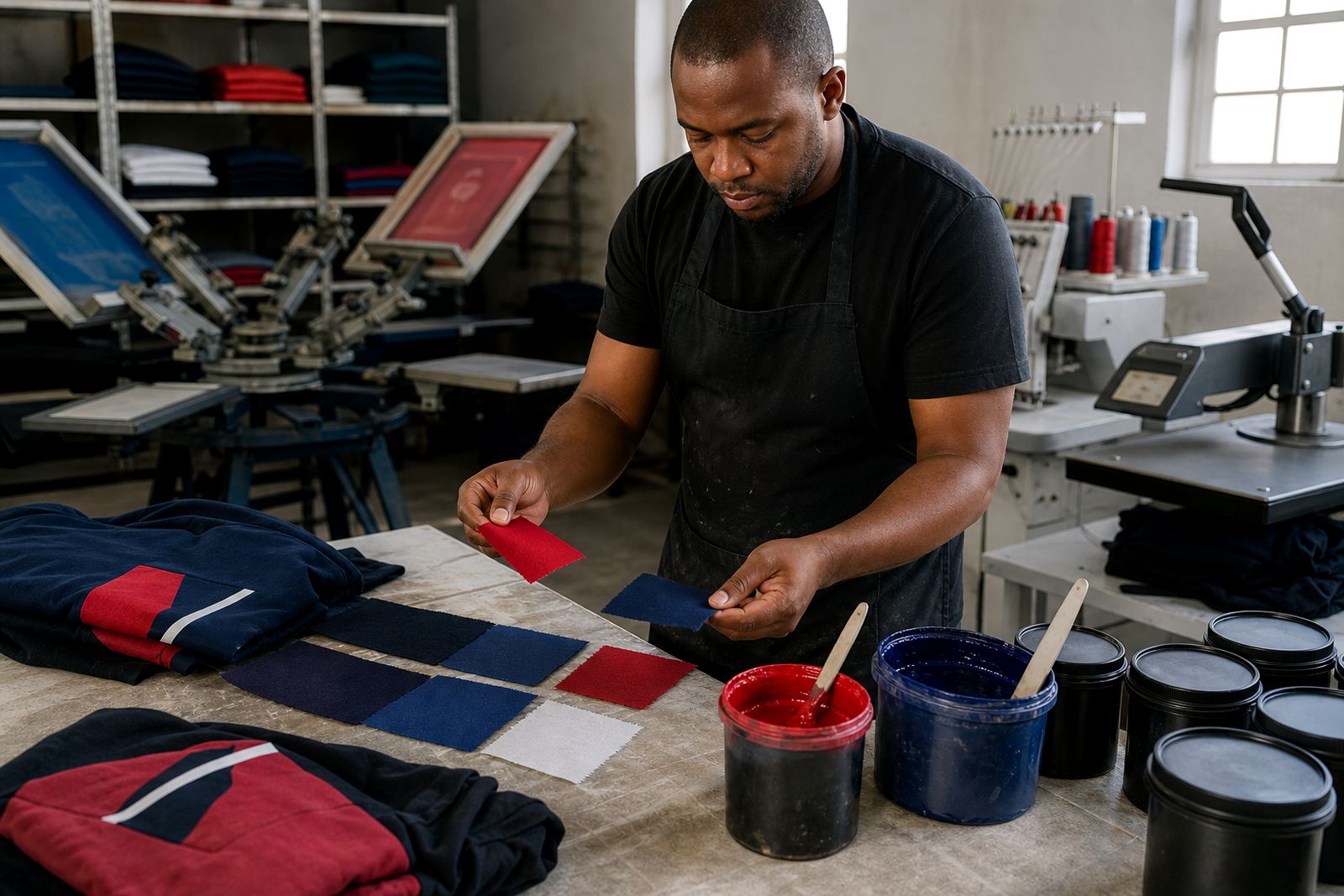
Send a note through our contact form with the garments and fabrics you decorate, the print or embroidery method, the colours you need matched, how much you run in a month and your area, and we will come back with practical supply options and a quote.
Open the contact form