Retail rail studio
Size-run colour logs so Monday matches last Friday on boutique rails.
Boutique rail colour control
Use the contact form with the garment base colour and the shade codes that must stay aligned across the size run. Add whether the set is screen printed, heat transferred, or stitched, so the right swatch note and film or thread options can be pulled for a boutique rail brief.
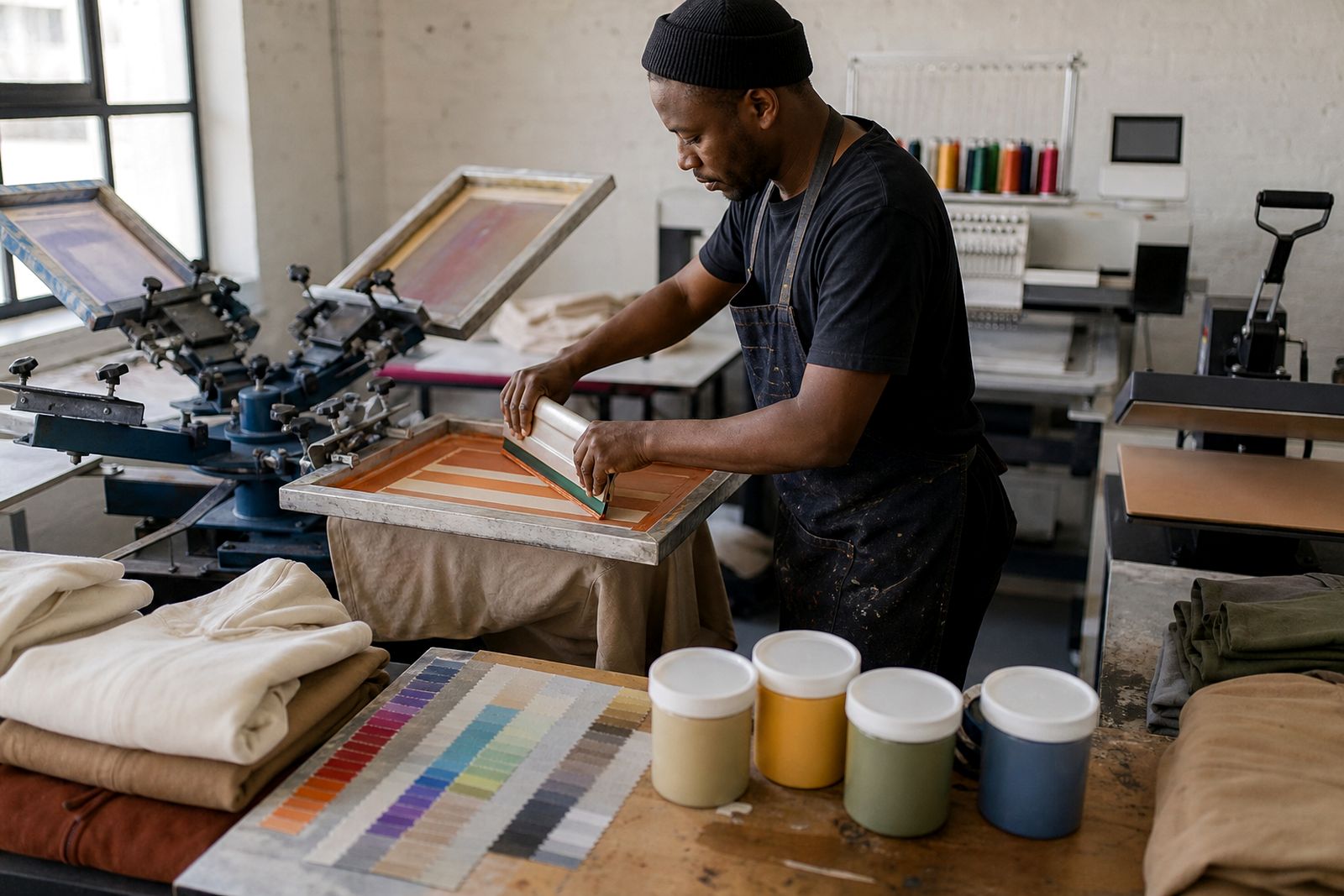
Retail rail studio is built for garments that hang side by side under shop lighting, where one off-shade medium can stand out across a full size run. The focus is on studio pigment set because repeatable colour, legible placement, and tidy hand feel matter more here than broad sampling. Swatch notes support the handover between studio, press, and store presentation when the same style lands on the rail over several delivery dates.
Start by fixing the approved garment colour, print position, and thread or ink reference for the full style. Next, strike a control sample on the actual fabric base and note the dryer, cure, or stitch settings used on that piece. Before bulk output, compare chest placements, sleeve hits, barcode visibility, and hanger-facing appearance across at least the smallest and largest sizes.
Retail jobs in South Africa often shift between warm inland afternoons and damp coastal mornings, and that can change how pigment sits on cotton or brushed fleece. For rail work, the visual check must happen under bright store-type light as well as in the studio, because navy, black, and ecru can drift in appearance between settings. During power-cut windows, teams usually protect the approved control sample first, then run the repeat checks once power returns.
Checks for size-run consistency
A useful rail file needs more than a colour name. Record the garment supplier, fabric composition, base shade, print or embroidery method, and which swatch note matches the approved sample. When sending the contact form, include the studio name, city, and whether the job is for boutique rails, chain retail, or event merchandise, so the materials list fits the display setting.
- Approved base fabric logged by colour
- Control sample matched under shop lighting
- Placement measured across key garment sizes
- Thread or ink lot differences recorded
- Follow-up note scheduled
Studios supplying rails into Meadowdale, Clearwater, Cresta, Pavilion, Tyger Valley, Baywest, Mimosa, and Riverside usually need one reference that survives multiple replenishment runs. A short note on fabric batch changes, substituted blanks, or revised barcode placement helps the next production slot match what is hanging in store.
Common faults on hanging garments
Rail presentation breaks down when colour approval happens on one garment only and the larger size set is ignored. Trouble also starts when the same artwork is pushed onto different blank suppliers without rewriting the placement and opacity notes. Keep each rail brief tied to one garment family, one finish standard, and one swatch reference at a time.
Most waste on retail garment runs comes from fabric shade variance, migration on dark bases, lint in the print area, and quick swaps between similar SKUs. Use the matching swatch note with the studio pigment set, then send details through our contact form with the city, size range, garment type, and whether embroidery threads must match prior shop stock. Include export or chain-store compliance notes if the rail pack is crossing provinces or borders.
Route: Studio pigment set. Browse more under Colours and Swatches.
What our Print and Embroidery Supplies customers say
Verified Google reviews
Also worth a look

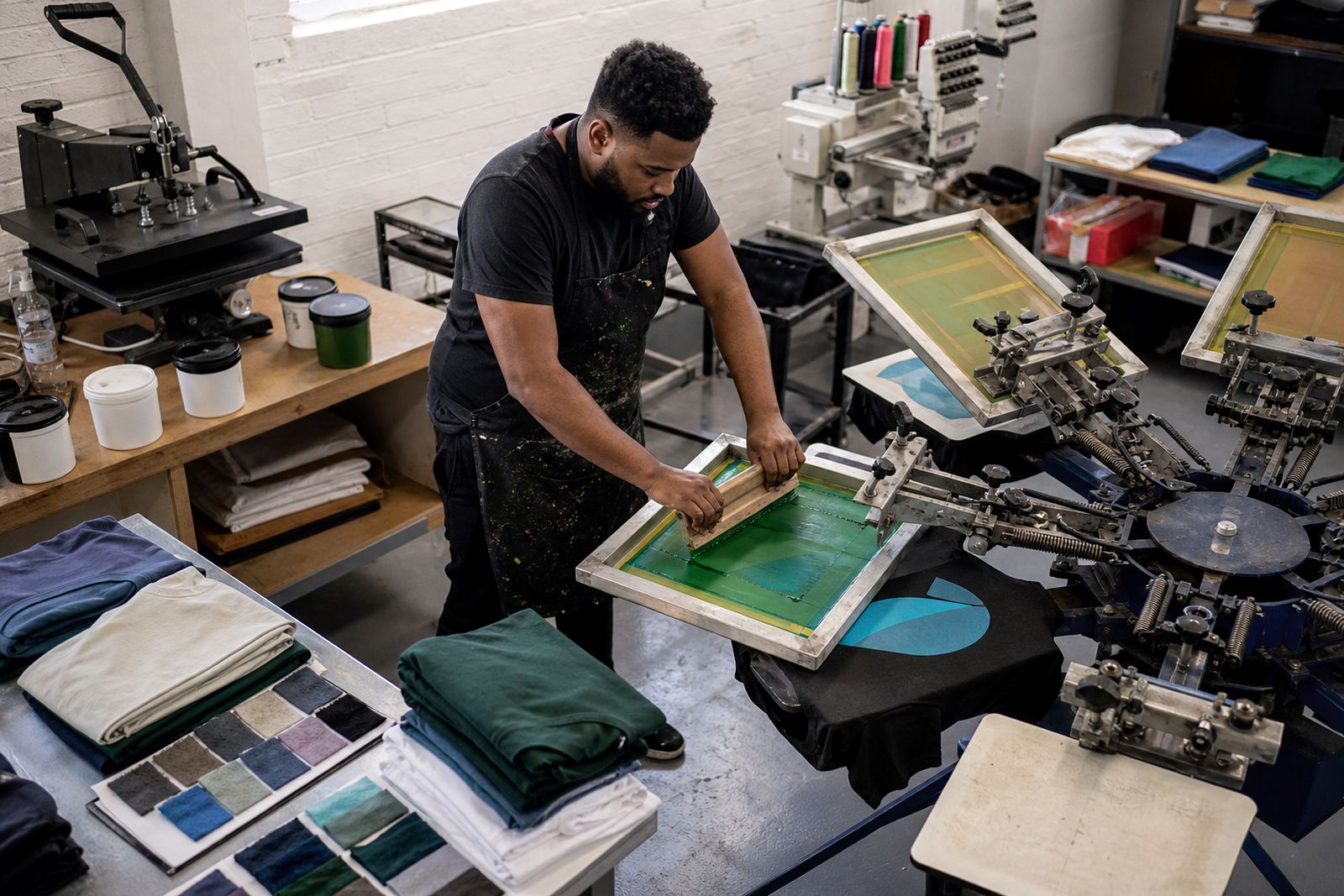
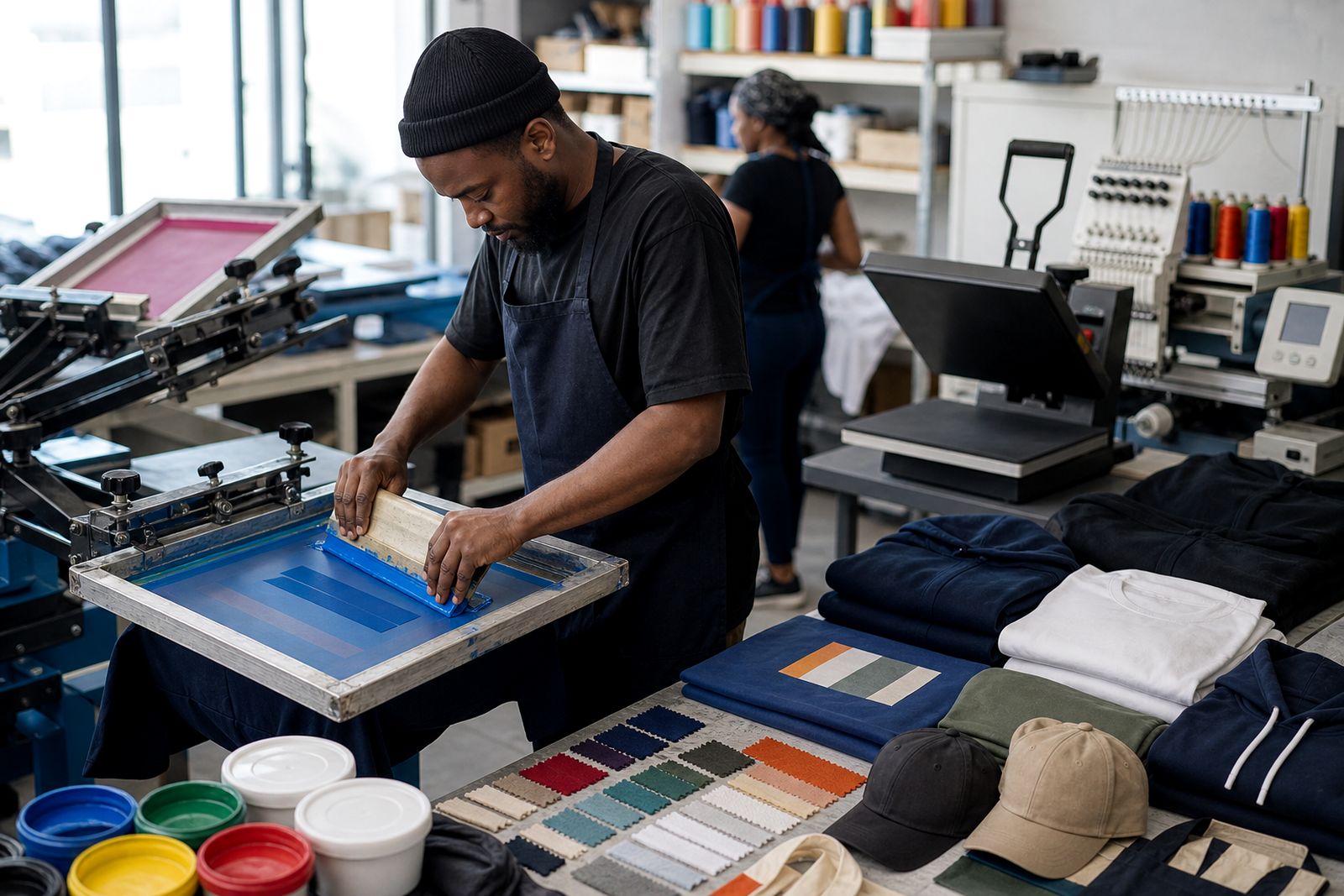
Tell us about your print room
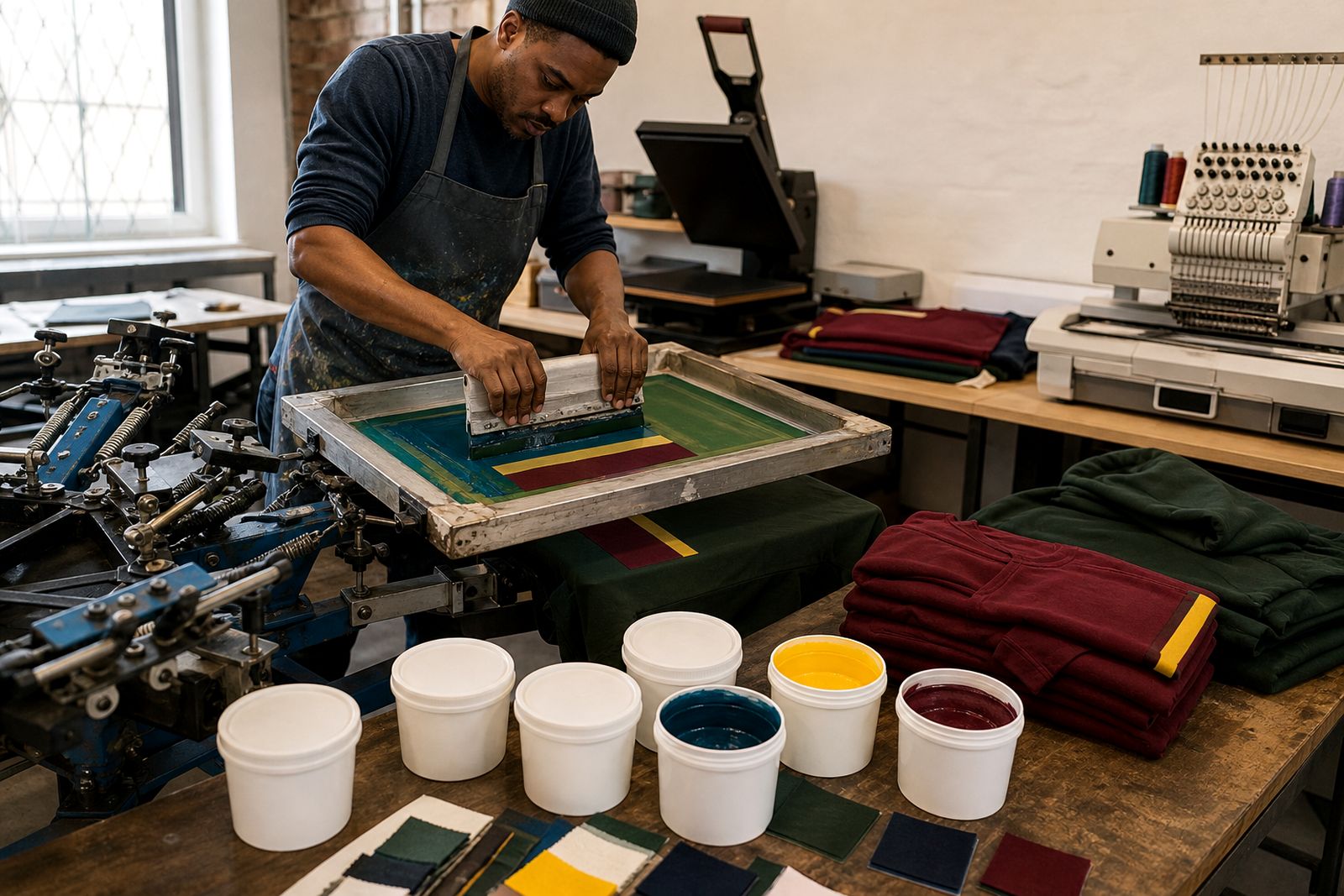
Send a note through our contact form with the garments and fabrics you decorate, the print or embroidery method, the colours you need matched, how much you run in a month and your area, and we will come back with practical supply options and a quote.
Open the contact form