Thread matching support
Bring the shade list you run most, your usual cone count, and any recent thread substitutions. It helps to note whether the bays are doing caps, flats, badges, or mixed garment work, because tension and colour handling differ across those setups. If backup stock has become uneven, mention which shades are repeatedly opened first.

Thread handling in busy shifts
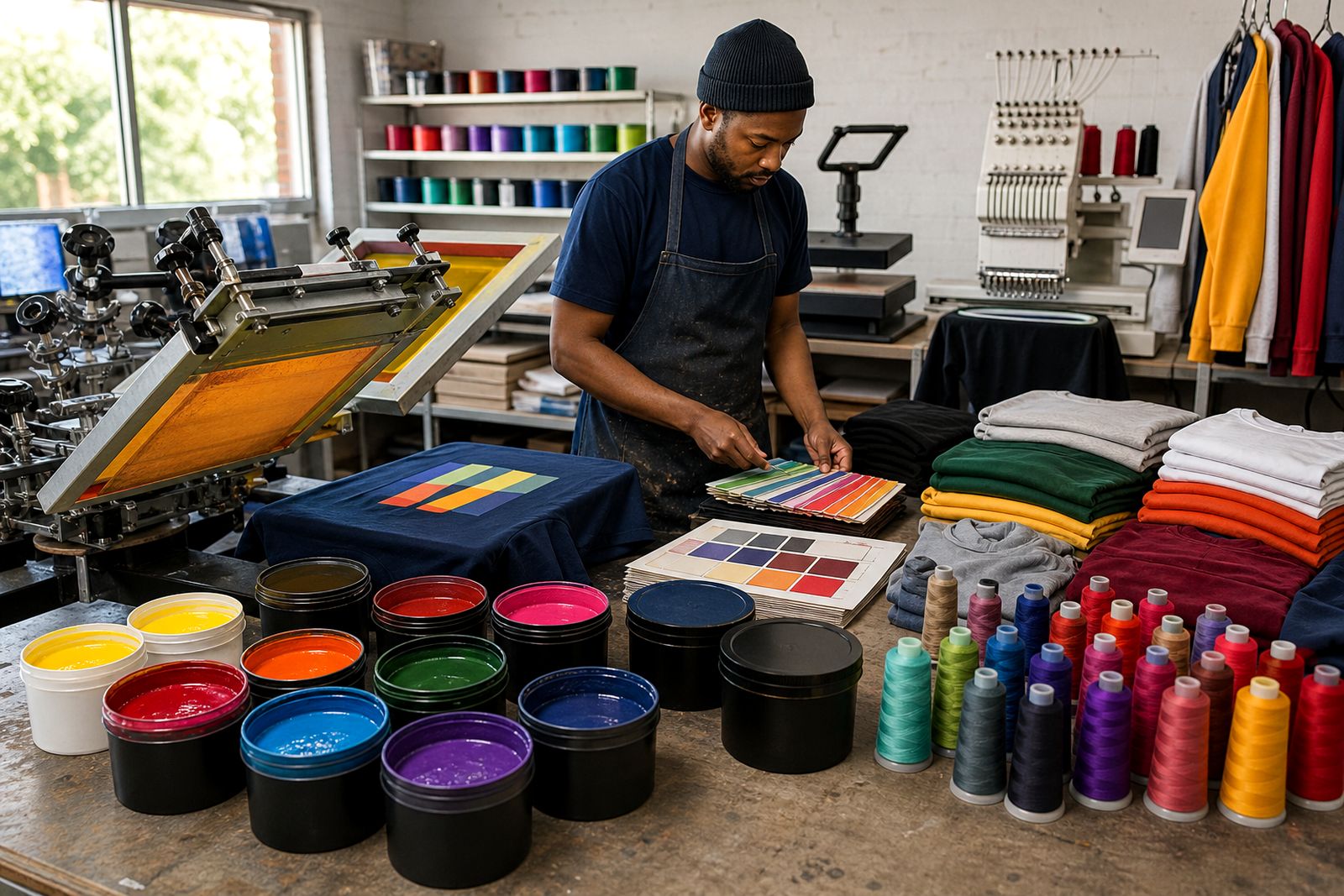
Humidity, lint and dye-lot changes affect thread more than most studios expect, so the service checks storage habits as well as what sits on the machine. From photos of your rack, we review cone order, repeat shades, and how operators mark swaps between garments and badge runs. Swatch notes help when you need colour references that sit beside thread choices on the bay wall.
- Weekly lint check at thread guides
- Monthly squeegee angle check
- Quarterly spare kit review
For a remote palette check, use our contact form and note the service name, cone count, and the machines using the palette. A clear photo of the current thread rack, sample sew-out, or any frayed cone cap helps if shade drift or lint build-up is part of the check. Where power cuts affect production, include the shift pattern so palette checks can be planned around stopped bays and restart testing.
Embroidery thread in real shifts
South African embroidery shifts usually lose time on colour continuity, not on design approval. One cone runs out mid-run, a substitute looks right in the rack and wrong on black fleece, or a repeat logo comes back with a visible shade jump from the previous batch. Embroidery thread palette service treats thread as an active production system for studio bays, more than a display of colours.
Name the studio, machine type, and the thread ranges in use before setting the palette. Polyester workwear shades behave differently from rayon branding colours, especially where heavy fills sit beside fine lettering. Embroidery thread palette service is built for operators who need quick visual checks between garment changes, not a long technical booklet. We keep cone groups, replacement notes, and matching references on short cards you can pin beside the embroidery bays.
Photograph the first approved sew-out for each key shade set and keep that image with the design code. That simple habit helps when a cone from a different lot enters the rack, or when a night shift needs to compare a new run against the last accepted sample. The service notes where those reference checks fit into normal production without adding another long checklist.
What comes with the palette
You get a thread palette arranged for the studio type, a concise check note, and guidance on how to separate daily shades from slower-moving stock. The emphasis stays on usable colour control in South African conditions, including Highveld dust, coastal moisture, and mixed-brand garment orders in one week. If a broader production setup is the better fit, we point you to Studios.
Set the thread palette against one embroidery bay before extending it across the room. Shade naming, rack position, and substitute notes need to match what the operator sees at the machine, not what looked tidy in storage. Read the paired note under Swatches if you want thread references and printed colour references to speak the same language, and use our contact form with the studio name, cone count, and problem shades if the rack needs reworking.
- First approved sew-out kept as reference
- Thread shades grouped by garment type
- Tension route reviewed for repeat colours
- Related: Studios and swatch notes
Conditions that affect thread choice
Ink Style SA plans these thread packs around actual South African studio conditions, including dusty inland storage, coastal damp, and interrupted shifts that break colour continuity. A thread match on the cone does not guarantee the same result once it is stitched into pique, fleece, twill, or structured caps. The service keeps the palette tied to how embroidery runs in production, with monthly squeegee angle check and quarterly spare kit review sitting beside colour discipline rather than replacing it.
Coastal studios often need closer attention on cone storage and bagging after humid spells, while inland rooms usually fight lint and dust around guides and tensioners. Export weeks and schoolwear peaks can leave the most-used navy, red and white shades badly unbalanced across bays, so the service checks whether the rack still reflects what the studio truly runs. A remote check of thread palettes, swatches, and bay notes, or a booked showroom viewing, helps sort production details, and if your setup is more advanced, say so in the email so the discussion starts at the right level.
Bay details worth recording
| Volume / band | 24 cones |
|---|---|
| Screen / role | Embroidery bays |
| Notes | Slim Inkstyle had stitch sets. We keep embroidery colour as a first-class palette beside print inks. |
Useful notes for this service include machine count, cones per bay, top repeat shades, and whether jobs are mainly uniforms, promo caps, badges, or retail garments. We also look at how substitutes are marked, where spare cones sit, and who signs off a new shade before production resumes. Use the contact form if you need the palette discussed against a particular bay layout or storage rack.
What our Print and Embroidery Supplies customers say
Verified Google reviews
Also worth a look

Tell us about your print room
Send a note through our contact form with the garments and fabrics you decorate, the print or embroidery method, the colours you need matched, how much you run in a month and your area, and we will come back with practical supply options and a quote.
Open the contact form